
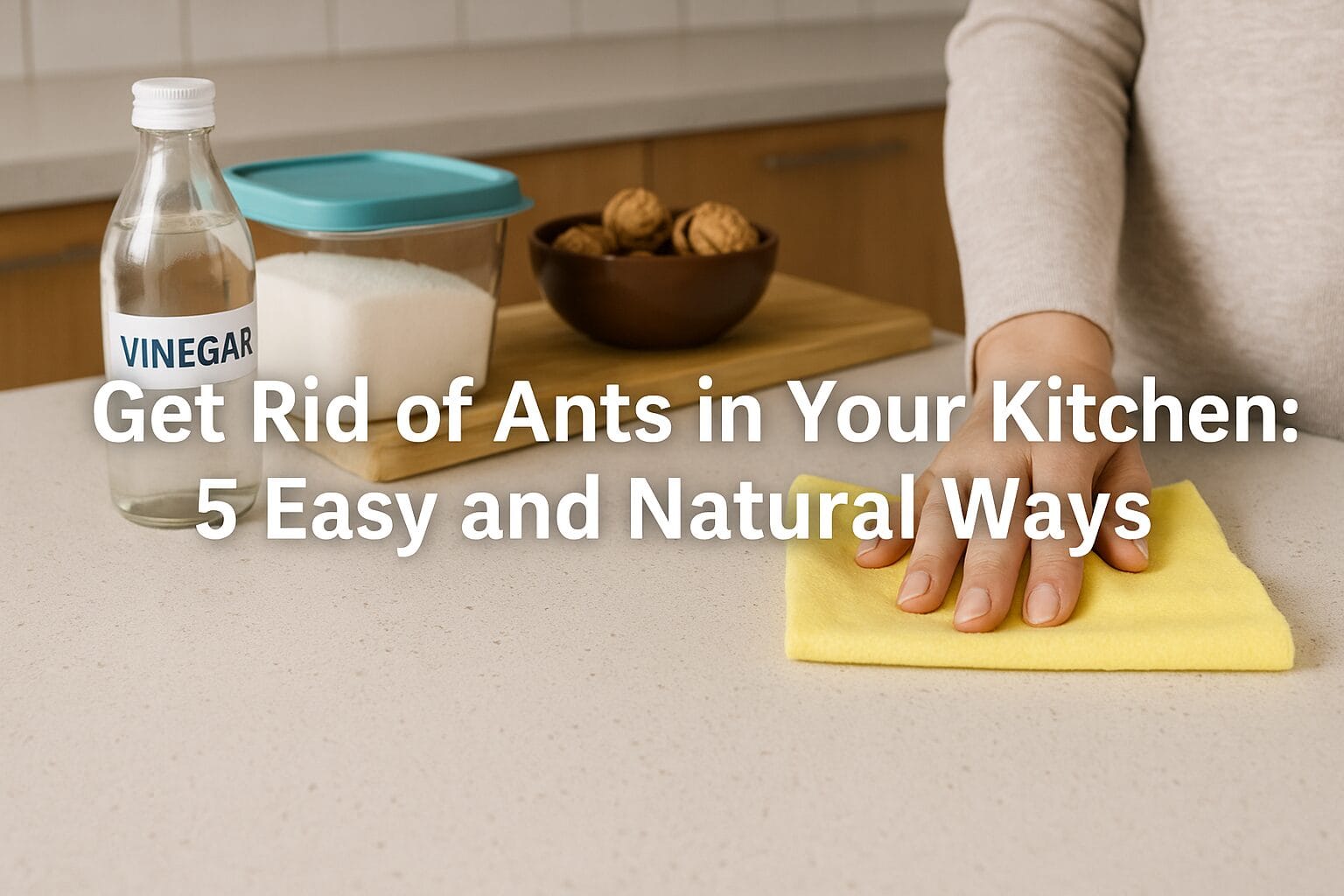
Get rid of ants in your kitchen with a few simple, natural methods that actually work. Ants invade for food, water, and shelter—but with the right prevention and treatment steps, you can stop the trail fast and keep them from coming back. Below are five easy strategies to get rid of ants in your kitchen and protect your home without harsh chemicals.
1) Find and Remove the Attractants
The quickest way to get rid of ants in your kitchen is to take away what they want: crumbs, spills, and open food. Wipe counters, sweep floors, and clean sticky spots (especially around trash bins and pet bowls). Seal pantry items in airtight containers—sugar, cereal, flour, and snacks are ant magnets. Don’t forget to rinse recyclables and take out the garbage daily. This simple reset can break the foraging cycle fast.
2) Erase the Scent Trail (Vinegar or Soap Rinse)
Ants navigate using pheromone trails. If you only squash the visible ants, more will follow the same invisible path. After you clean, spray a 1:1 mix of white vinegar and water along baseboards, counters, and known trails, then wipe dry. Alternatively, use warm water with a few drops of dish soap. Either method disrupts the chemical trail, helping you get rid of ants in your kitchen by confusing the next wave of foragers.
3) Seal Entry Points and Fix Moisture
Follow the line of ants back to where they enter: window frames, door thresholds, gaps under cabinets, or tiny wall cracks. Seal with silicone caulk or weatherstripping. Repair drips under the sink and wipe condensation on pipes—moisture draws ants. By blocking access and removing water sources, you’ll get rid of ants in your kitchen long term, not just today.
4) Use Pet-Safe, Natural Barriers (Diatomaceous Earth, Cinnamon, Peppermint)
For a non-toxic barrier, sprinkle a thin line of food-grade diatomaceous earth (DE) where ants enter. DE is a fine powder that damages the insects’ exoskeletons—effective yet safe when used properly. You can also try natural deterrents: cinnamon, clove, or coffee grounds placed near entry points; or a peppermint oil spray (10–15 drops in 1 cup water with a splash of vinegar). These create a scent boundary that helps get rid of ants in your kitchen without strong chemical odors.
5) Deploy Baits for the Nest (Not Just the Foragers)
If ants keep returning, you likely have a nearby nest. Baits are the most reliable way to eliminate it. Place sugar-based ant baits along trails (but out of reach of kids and pets). For protein-seeking species, try a protein or grease-based bait. Don’t spray repellent on or near the bait—let foragers carry the toxic food back to the colony. This is how you get rid of ants in your kitchen at the source rather than fighting endless waves.
Prevention Checklist (Quick Wins)
- Wipe counters and sweep floors daily; clean under small appliances.
- Store pantry items in sealed containers; keep fruit in the fridge when possible.
- Rinse recyclables; empty trash and compost frequently.
- Dry sink and counters at night; fix leaks under the sink.
- Seal cracks around windows, doors, and baseboards.
FAQ
What’s the fastest way to get rid of ants in your kitchen?
Clean up food and spills, break the scent trail with vinegar or soapy water, and set bait along active trails. This combo removes the attractant, confuses foragers, and targets the nest.
Are natural methods effective?
Yes—cleaning, sealing, vinegar/soap trail removal, and diatomaceous earth are effective. For persistent colonies, pair natural steps with targeted bait to fully get rid of ants in your kitchen.
Should I use spray insecticides?
Contact sprays kill visible ants but can scatter trails and push colonies to split. For long-term control, baits work better because they reach the nest. If you do spray, use it only for direct, isolated spots—not near baits.
How long do baits take to work?
Expect several days to a couple of weeks for full colony reduction. Keep areas clean so ants prefer the bait over kitchen crumbs.
Helpful Resources
- University of California IPM: Ant Management
- U.S. EPA: Safe, Effective Pest Control
- University of Minnesota Extension: Ants in Homes
Explore More on AnswerNimbus
Want more practical fixes? Check out How-To & Fixes for cleaning, maintenance, and DIY solutions—or browse Home & Life for smart household tips.

AnswerNimbus publishes practical how-tos, definitions, and tech help for everyday users.