
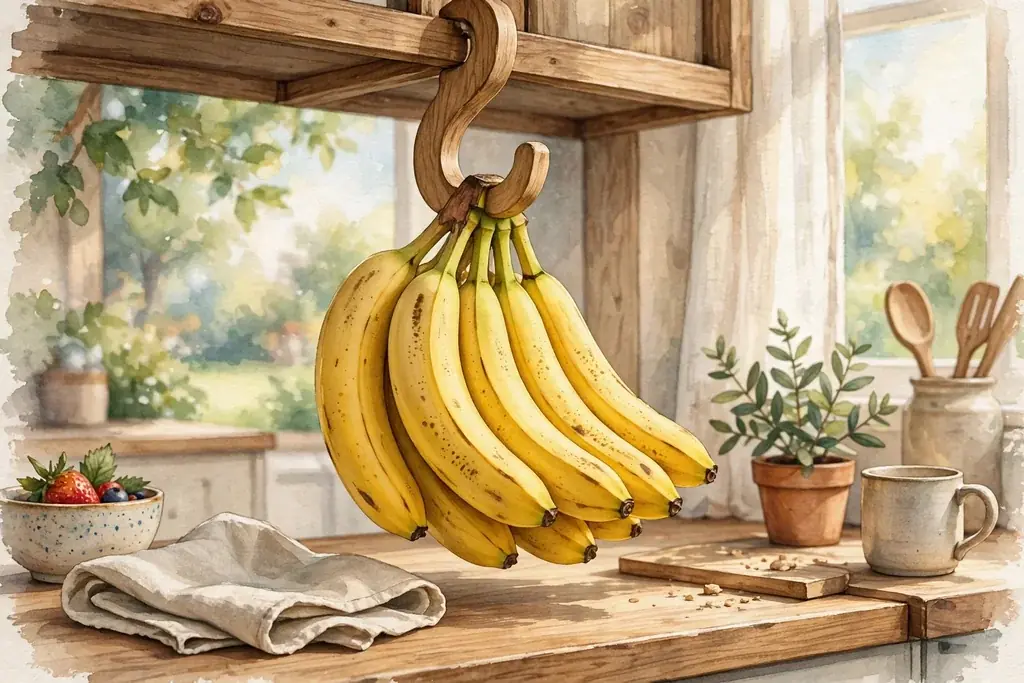
How to Keep Bananas Fresh Longer: 7 Storage Tricks That Actually Slow Ripening
You buy a bunch of green bananas on Monday, and by Thursday they are speckled, soft, and racing toward banana bread. Bananas seem to ripen on their own schedule, and usually faster than you would like. So how to keep bananas fresh longer? The answer starts with understanding why they ripen at all: bananas are climacteric fruit, meaning they keep ripening after picking, driven by a natural plant hormone called ethylene gas. Every trick in this guide works by slowing that process down — by controlling ethylene, temperature, and airflow. None of them is magic, but used together they genuinely buy you extra days.
Why Bananas Ripen So Fast
Most fruit stops changing once it leaves the plant. Bananas do the opposite. After harvest, they continue producing ethylene gas, and ethylene triggers the enzymes that convert starch into sugar, soften the flesh, turn the peel from green to yellow, and develop the aroma we associate with a ripe banana. Worse, the process feeds on itself: ethylene stimulates more ethylene production, so a ripening banana accelerates its own ripening — and that of its neighbours.
This is why a whole bunch ripens faster than a single banana, and why a fruit bowl can turn into a ripening chain reaction. The bananas release ethylene, the apples and avocados nearby respond to it and release their own, and everything in the bowl softens together. Controlling bananas, then, is mostly about controlling ethylene exposure and temperature, since warmth speeds the enzymes up and cool slows them down.
Trick 1: Buy at Different Stages
The simplest trick happens at the store. Instead of buying one bunch at a single stage of ripeness, buy bananas at different stages: some yellow and ready to eat soon, some still green at the tips for later in the week. A bunch where every banana is at the same stage will ripen together and leave you with a glut; a staggered purchase spreads the window naturally, with no storage heroics required.
Look for fruit that is evenly coloured and free of bruises or soft brown spots when you buy. A bruised banana releases more ethylene and softens faster, and it can drag its neighbours along with it. If one banana in a bunch is already damaged, separate it and eat it first rather than letting it accelerate the rest.
Trick 2: Separate the Bananas from the Bunch
A clustered bunch emits ethylene cumulatively — each banana contributes to the cloud around the others. Pulling bananas apart reduces that shared exposure, so each fruit ripens more on its own schedule. Twist bananas gently away from the crown rather than yanking them, which can tear the peel and create a soft spot that ripens fast.
Separation also makes the rest of the tricks easier. A single banana is simpler to wrap, simpler to hang, and simpler to move to the fridge at exactly the right moment than a whole bunch. It is a small habit, but it is the foundation the other tricks build on.
Trick 3: Wrap the Stems Snugly
Covering the stem end of a banana — or the crown of a bunch — with plastic wrap or foil is one of the most widely repeated banana tips, and it deserves an honest assessment. Bananas release a good share of their ethylene from the stem area, so wrapping the stems snugly traps some of that gas before it reaches the fruit. Many home tests and produce guides report that it slows browning.
Be honest about its limits, though: the benefit is debated, and stem wrapping is not magic on its own. It works best combined with cool storage and separation from other ripening fruit, not as a standalone miracle. Wrap the stems snugly, press the wrap firmly around the crown, and re-wrap if you separate bananas later — each separated banana gets its own wrapped stem. Think of it as one layer of defence among several, not the whole strategy.
Trick 4: Keep Bananas Away from Other Ripening Fruit
Ethylene is a shared language among fruit. Apples, avocados, pears, and tomatoes all produce it, and bananas respond to it eagerly. Storing bananas in the same bowl as apples or avocados is the fastest way to ripen them all at once — which is useful if you want to ripen an avocado quickly, and counterproductive if you want your bananas to last.
Give bananas their own spot on the counter, away from the fruit bowl. A separate plate or a banana stand works well. The same logic applies in reverse: if you have green bananas you want to ripen faster, putting them in a paper bag with an apple or avocado will speed things along. Ethylene is a tool, and the trick is pointing it in the direction you want.
Trick 5: Find a Cool, Dark Spot
Temperature is the other great lever on ripening, because the enzymes that soften a banana work faster when warm. A cool, dark spot — away from direct sun, ovens, and warm windows — slows those enzymes without stopping them. If you have a cool pantry or a basement shelf, that is ideal; around 13 to 15 degrees Celsius is often cited as a good storage temperature when it is available, though most kitchens are warmer than that and the fruit still benefits from simply being out of the sun and away from heat sources.
Hanging the bunch on a hook or banana stand helps here too. Air circulates around the fruit instead of trapping warmth and moisture against a countertop, and the bananas stay off hard surfaces that cause bruises. A bruise is a fast-ripening spot, so anything that prevents bruising also prevents premature softening.
Trick 6: Do Not Refrigerate Green Bananas
This is the rule most people get wrong. Refrigerating a green banana does not pause its ripening neatly — cold below ripening temperature disrupts the process, so the fruit may never ripen properly. The peel darkens, the flesh can stay starchy and flavourless, and you end up with a banana that looks ripe and tastes wrong. Green bananas belong on the counter, not in the fridge.
Once a banana is ripe, though, the fridge becomes your friend. Move fully yellow bananas — ideally with a few brown speckles, when the flavour has fully developed — into the refrigerator, and the cold will slow further softening considerably. The peel will darken, sometimes dramatically, which puts many people off. Ignore the peel: the fruit inside stays good for a few extra days, sweet and usable, even when the outside looks past its best. Judge a refrigerated banana by its flesh, not its skin.
Trick 7: Freeze the Overripe Ones
When bananas pass the point of pleasant eating, do not throw them away — freeze them. Peel overripe bananas first (a frozen banana in its peel is miserable to deal with), break them into chunks, and store them in a bag or container in the freezer. Frozen banana chunks blend beautifully into smoothies, and thawed bananas are ideal for banana bread, muffins, and pancakes, where softness is a virtue.
Freezing is the honest end of the storage story. It does not preserve a banana for fresh eating — thawed banana is soft and brown — but it rescues the fruit for cooking and blending, which is where overripe bananas shine anyway. A freezer bag of banana chunks turns a loss into an ingredient, and it means the bunch you bought on Monday still has a purpose on Sunday.
Quick Summary
Bananas keep ripening after picking because they produce ethylene gas, which triggers the enzymes that turn starch to sugar and soften the fruit. To slow that down: buy at staggered stages, separate bananas from the bunch, wrap the stems snugly (helpful combined with cool storage, not magic alone), keep bananas away from other ripening fruit like apples and avocados, store them in a cool dark spot around 13 to 15 degrees Celsius if available, never refrigerate green bananas, refrigerate only once ripe even though the peel darkens, and freeze overripe bananas peeled for smoothies and baking.
Frequently Asked Questions
Does wrapping banana stems really work?
It helps, but it is not magic. Bananas release ethylene from the stem area, so a snug wrap traps some of that gas. The benefit is debated and works best combined with cool storage and separation from other ripening fruit, rather than on its own.
Why should you not refrigerate green bananas?
Cold disrupts the ripening process in unripe bananas, so they may never ripen properly — the peel darkens while the flesh stays starchy and flavourless. Refrigerate only once bananas are fully ripe, when the cold slows further softening and the flesh stays good for a few extra days.
Do bananas ripen faster next to apples?
Yes. Apples, avocados, pears, and tomatoes all produce ethylene gas, and bananas respond to it. Keeping bananas in the same bowl as those fruits speeds ripening for everything in the bowl, so give bananas their own spot if you want them to last.
Can you freeze bananas?
Yes — peel overripe bananas first, break them into chunks, and freeze them in a bag or container. Frozen banana chunks are excellent for smoothies, and thawed bananas are ideal for banana bread and baking, where softness is an advantage.
Related Guides
- How Long Do Leftovers Last in the Fridge? The 3–4 Day Rule, Explained
- Save Space in a Small Kitchen: 7 Clever Ways to Maximize Every Inch
- 8 Genius Ways to Reduce Dust in Your Home
External Resources
More in Home & Life
How Long Do Leftovers Last in the Fridge? The 3–4 Day Rule, Explained
How Long Do Leftovers Last in the Fridge? The 3–4 Day Rule, Explained Almost everyone has played the same fridge-door game: open a container of unknown age, sniff it, shrug, and decide it is probably…

Get Rid of Ants in Your Kitchen: 5 Easy and Natural Ways
Get rid of ants in your kitchen with a few simple, natural methods that actually work. Ants invade for food, water, and shelter—but with the right prevention and treatment steps, you can stop the…

Save Space in a Small Kitchen: 7 Clever Ways to Maximize Every Inch
Save space in a small kitchen with a few clever strategies that make every inch count. Whether you live in a cozy apartment, a small home, or simply have a compact cooking space, thoughtful…