
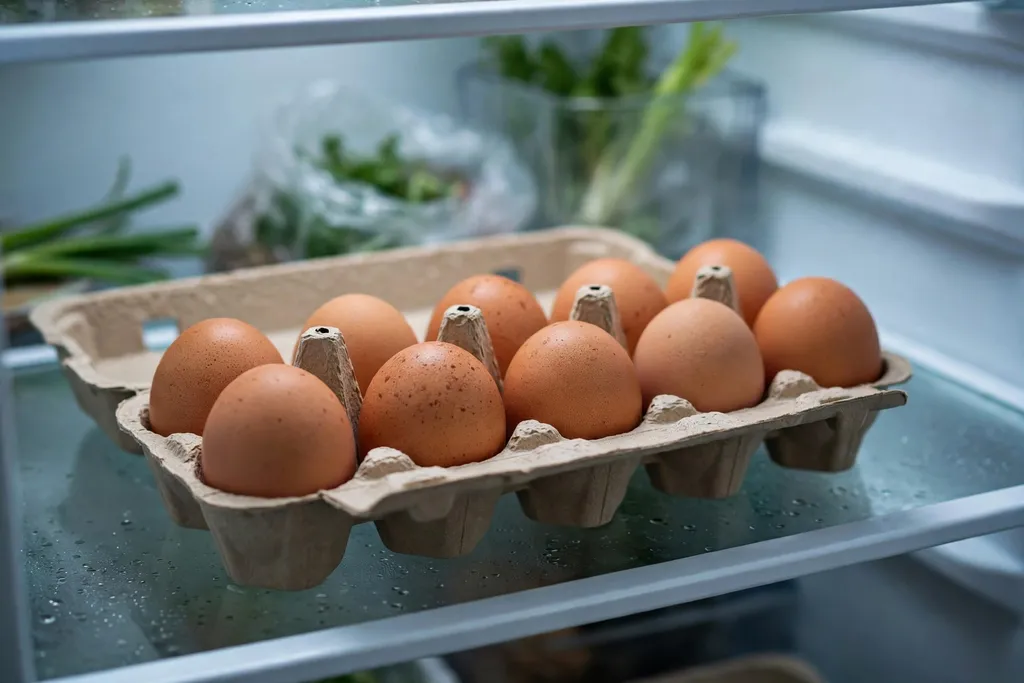
How Long Do Eggs Last in the Fridge? The USDA Timelines, Explained
Open the fridge, spot a carton you bought weeks ago, and the same question comes up every time: are these eggs still good, or is it time to throw them out? The answer is more generous than most people expect, but it depends entirely on what form the eggs are in. A raw egg in its shell lasts far longer than a cracked-open yolk, and a hard-cooked egg sits somewhere in between. So how long do eggs last in the fridge? According to the United States Department of Agriculture (USDA) Food Safety and Inspection Service, raw eggs in the shell keep for 3 to 5 weeks when refrigerated at 40°F (4°C) or below. Raw whites or yolks out of the shell last only 2 to 4 days, and hard-cooked eggs keep for up to 1 week, provided they were refrigerated within 2 hours of cooking. Those three timelines cover nearly every egg situation in a home kitchen, and understanding why they differ makes the whole subject much less of a guessing game.
The USDA Timelines at a Glance
It helps to see the numbers side by side before getting into the reasons behind them. Raw eggs in the shell, kept refrigerated at 40°F (4°C) or below: 3 to 5 weeks. Raw egg whites or yolks, removed from the shell and stored in a covered container in the fridge: 2 to 4 days. Hard-cooked eggs, in the shell or peeled and kept in a sealed container: up to 1 week, as long as they went into the fridge within 2 hours of cooking. The pattern is straightforward. The shell is a remarkably good protective package, and once it is gone — whether because you cracked the egg or because cooking washed away its protective coating — the clock speeds up dramatically. That is why the form of the egg matters more than almost anything else, including the date printed on the carton.
Why 40°F (4°C) Is the Line That Matters
Refrigeration does not make eggs immortal. It slows down the bacteria that cause food poisoning, most famously Salmonella, to a crawl. At fridge temperature, bacterial growth is slow enough that a properly stored egg stays safe for weeks. At room temperature, the same bacteria multiply far more quickly, which is why eggs should not sit out on the counter for more than 2 hours. The danger zone for perishable food generally runs from 4°C to 60°C (40°F to 140°F), and eggs left in that range for too long should be thrown out rather than rescued. If you are unsure whether your fridge is cold enough, a simple fridge thermometer takes the guesswork out of it. Many fridges run warmer than their dial suggests, especially an overstuffed one where cold air cannot circulate, and a thermometer reading of 4°C or below is the only way to be sure the USDA timelines actually apply to your eggs.
Raw Eggs in the Shell: 3 to 5 Weeks
The shell is doing more work than it appears to. A fresh egg is sealed by its shell and by a thin protective coating applied during processing, which helps keep bacteria out and moisture in. As long as the shell is intact and the egg stays cold, that package holds up well, which is where the 3-to-5-week window comes from. Note that the window is a range, not a deadline stamped on a particular day. An egg stored properly from the day it was packed will be at the longer end; an egg that sat in a warm car for an hour on the way home from the store will not. Store eggs in their original carton, on an interior shelf rather than in the door. The door is the warmest, most temperature-variable part of the fridge, swinging through warm air every time it opens, while the back of a middle or lower shelf stays cold and steady. The carton also protects the shells from cracking against other items and stops the eggs from picking up strong odours from nearby food. Do not wash eggs before storing them, either. Washing can remove the protective coating and may help bacteria move through the shell, which is the opposite of what you want.
Raw Whites and Yolks Out of the Shell: 2 to 4 Days
Once an egg is cracked open, everything changes. Without the shell, the whites and yolks are exposed to air and to whatever bacteria are present in the fridge, and their storage life collapses from weeks to days. The USDA guidance is 2 to 4 days for raw whites or yolks kept refrigerated in a covered container. This is the situation that catches people out most often: a recipe that called for yolks only, leaving whites in a bowl, or a meringue project that used the whites and left yolks behind. The fix is simple but worth making a habit. Transfer leftovers to a clean, covered container right away, label it with the date if you are likely to forget, and use it within the window. If you cannot use leftover whites or yolks in time, they freeze well — beaten whites freeze for months, while yolks freeze better with a pinch of salt for savoury use or sugar for baking stirred in first. Freezing is a far better plan than leaving a bowl of yolk in the fridge for a week and hoping for the best.
Hard-Cooked Eggs: Up to 1 Week
Hard-cooked eggs seem sturdy, but cooking removes the protective coating from the shell, leaving the egg more open to bacteria than a raw egg in its shell. That is why the USDA limit is up to 1 week, and why the first 2 hours matter so much: hard-cooked eggs should be refrigerated within 2 hours of cooking. An egg left in a lunch bag or on a picnic table all afternoon has already used up its safety margin, even if it then goes back into the fridge. Once cooled and refrigerated, keep hard-cooked eggs in a sealed container, peeled or unpeeled. Peeling them in advance is fine and makes them easier to grab for lunches, but a sealed container matters either way, both to keep them from drying out and to keep their smell contained. If you are packing them for lunches, include an ice pack so they stay cold until eaten, and do not let them sit at room temperature for more than 2 hours.
Reading the Carton: Sell-By Dates and Pack Dates
Carton dates cause a lot of unnecessary egg throwing. The sell-by date, or best-before date on Canadian cartons, is mainly a guide for stores and for quality, not a safety deadline. Properly refrigerated eggs can still be good after that date passes, within the 3-to-5-week window from packing. Many cartons also carry a three-digit pack date, the day of the year the eggs were packed, running from 001 for January 1 to 365 for December 31. That number tells you how old the eggs actually are, which is more useful than the sell-by date for judging where they sit in the storage window. A carton packed three weeks ago and kept cold is a different proposition from one packed five weeks ago, even if both were bought on the same day. The practical habit is to buy the freshest carton available, keep it in the fridge from the moment you get home, and use the oldest eggs first rather than letting one carton linger while a newer one gets used up.
The Canadian Context
For Canadian readers, the picture is the same in all the ways that matter. In Canada, eggs sold in grocery stores are washed and graded, and washing removes the natural protective cuticle on the shell, which is exactly why Canadian eggs must be refrigerated — just like American eggs. You will find them in the refrigerated section of the store, and they should go straight into your fridge at home, in the coldest section, usually the body of the fridge rather than the door. Health Canada advises that eggs, raw or cooked, should not be kept at room temperature for more than 2 hours, and that hard-boiled eggs keep in a sealed container in the refrigerator for up to one week — matching the USDA timelines. Canadian guidance also stresses cooking egg dishes to a safe internal temperature of at least 74°C (165°F). One practical difference is labelling: Canadian cartons show a best-before date rather than an American-style sell-by date, but the principle is the same. The date passing does not automatically mean the eggs are unsafe, and the storage timelines, not the printed date alone, are what should guide your decision.
The Float Test: A Freshness Hint, Not a Safety Test
The float test is everywhere online, and it is worth being precise about what it can and cannot tell you. Place an egg in a bowl of water. A very fresh egg lies flat on the bottom. An older egg stands upright or floats, because air slowly enters through the porous shell over time and the air cell inside the egg grows, making the egg more buoyant. That is real physics, and as a rough freshness hint it has some value: a floating egg is an older egg. But the float test is not a safety test, and it must never be treated as proof that an egg is safe or unsafe. A floating egg is not necessarily contaminated, and — more importantly — a sinking egg is not guaranteed safe. An egg can sink and still have been stored badly, left out too long, or cracked in a way you missed. Bacteria do not change how an egg floats. So use the float test, if you like, as one clue about age, alongside proper refrigeration and the storage timelines. Never use it to overrule them. If an egg is past its window, has a cracked shell, or smells off, the float test result does not save it.
When to Throw an Egg Out
When in doubt, your senses and the timelines are the decision-makers. A bad smell is the clearest signal: crack the egg into a separate bowl, never directly into your batter or pan, and if it smells sulfurous or simply off, discard it. A cracked shell is another reason to discard, since cracks let bacteria in. Eggs with slimy or discoloured whites, or an unusual appearance once cracked, should go too. Equally, any egg that has sat at room temperature for more than 2 hours should be thrown out, even if it looks and smells fine. And if you cannot remember when you cooked those hard-boiled eggs, and the honest answer is that it might have been more than a week ago, discard them. Eggs are inexpensive, and food poisoning is not worth the gamble. The separate-bowl habit is the single best safeguard in the kitchen: it costs nothing, it protects the rest of your ingredients, and it gives you a clean look and sniff at every egg before it goes into the meal.
Storage Habits That Actually Help
A few small habits make the timelines work in your favour. Buy eggs last on your shopping trip so they spend the least time warming up, and refrigerate them as soon as you get home. Keep them in the carton, on an interior shelf, at 4°C or below. Use older eggs first. Do not store eggs in the fridge door, no matter how convenient the moulded egg holder looks. Do not wash them before storage. Crack eggs into a separate bowl before adding them to a recipe. Refrigerate hard-cooked eggs promptly, and refrigerate leftovers containing eggs within 2 hours of cooking. None of this is complicated, and together it is the difference between a carton that comfortably lasts weeks and one that becomes a question mark. Eggs reward boring, consistent storage more than any clever trick, and the float test, for all its popularity, is no substitute for a cold fridge and a carton that stayed in it.
Quick Summary
Raw eggs in the shell last 3 to 5 weeks in a refrigerator at 40°F (4°C) or below, stored in their original carton on an interior shelf. Raw whites or yolks out of the shell last only 2 to 4 days in a covered container. Hard-cooked eggs last up to 1 week, provided they were refrigerated within 2 hours of cooking. In Canada, eggs are washed and must be refrigerated, and a sell-by or best-before date passing does not automatically mean eggs are unsafe. The float test is a freshness hint, not a safety test: a floating egg is older, not necessarily unsafe, and a sinking egg is not guaranteed safe. When in doubt, crack into a separate bowl, trust a bad smell, and throw the egg out.
Frequently Asked Questions
How long do raw eggs last in the fridge?
Raw eggs in the shell last 3 to 5 weeks in a refrigerator kept at 40°F (4°C) or below, according to the USDA Food Safety and Inspection Service. Keep them in their original carton on an interior shelf, not in the door, and discard any egg with a cracked shell or a bad smell.
Does the sell-by date mean eggs go bad that day?
No. The sell-by date is mainly a guide for stores, not a safety deadline. Properly refrigerated eggs can still be good after that date passes, within the USDA's 3-to-5-week window. When in doubt, crack the egg into a separate bowl first and check for an off smell or unusual appearance before using it.
Does the float test prove an egg is safe to eat?
No. The float test only hints at freshness: as an egg ages, its air cell grows and it becomes more likely to float, but a floating egg is not necessarily unsafe and a sinking egg is not guaranteed safe. Use it as a rough freshness clue only, and rely on proper refrigeration, the storage timelines, and your nose instead.
How long do hard-cooked eggs last?
Hard-cooked eggs last up to one week in the refrigerator, provided they were refrigerated within two hours of cooking. Keep them in a sealed container, and do not leave them at room temperature for more than two hours.
Related Guides
- How Long Do Leftovers Last in the Fridge?
- How to Keep Bananas Fresh Longer: 7 Storage Tricks That Actually Slow Ripening
- Save Space in a Small Kitchen
External Resources
More in Home & Life
How to Keep Bananas Fresh Longer: 7 Storage Tricks That Actually Slow Ripening
How to Keep Bananas Fresh Longer: 7 Storage Tricks That Actually Slow Ripening You buy a bunch of green bananas on Monday, and by Thursday they are speckled, soft, and racing toward banana bread…
How Long Do Leftovers Last in the Fridge? The 3–4 Day Rule, Explained
How Long Do Leftovers Last in the Fridge? The 3–4 Day Rule, Explained Almost everyone has played the same fridge-door game: open a container of unknown age, sniff it, shrug, and decide it is probably…

Get Rid of Ants in Your Kitchen: 5 Easy and Natural Ways
Get rid of ants in your kitchen with a few simple, natural methods that actually work. Ants invade for food, water, and shelter—but with the right prevention and treatment steps, you can stop the…