
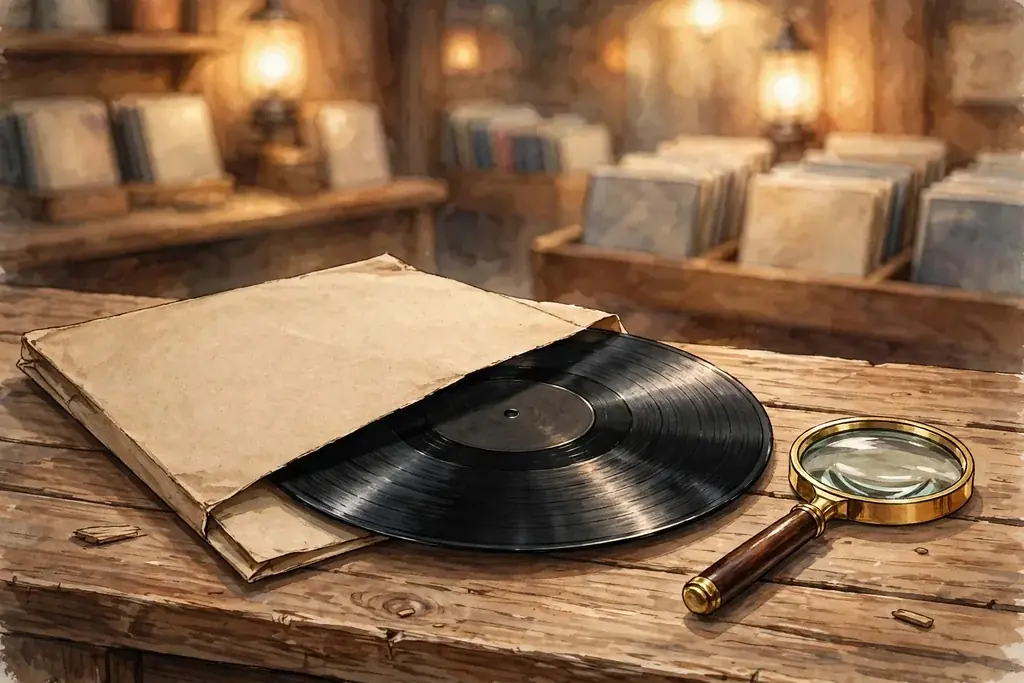
How to Tell If a Vinyl Record Is Worth Money: 7 Checks Before You Sell
That crate in the attic, the shelf of albums you inherited, the box you picked up at a garage sale — is any of it actually worth something? Vinyl has enjoyed a genuine revival, and some records do sell for serious money. Most do not. So how to tell if a vinyl record is worth money? The answer is never one thing. Value comes from the combination of rarity, condition, and demand, and old alone does not mean valuable. Run these seven checks before you sell anything, and you will know which records deserve a closer look and which are simply good listening.
Check 1: Is It a First Pressing?
For most desirable records, the first pressing — the copies manufactured in the original production run — is the one collectors want most. Later reissues of the same album are usually far more common and far less valuable, even when the music is identical. First pressings matter because they are closest to the original release: the original mastering, the original artwork, the original label design, and often a much smaller production run than the reissues that followed over decades.
How do you tell? Start with the label. Original pressings often carry the label design of the era, which changed over the years for major labels. Then check the sleeve for the original catalogue number and any details that differ from reissues, such as a different inner sleeve or a missing barcode — barcodes only became standard on record sleeves in the 1980s, so their absence can be a clue, though never proof on its own. The definitive tool is the matrix number, covered in Check 4.
Check 2: Grade the Condition Honestly
Condition is where most sellers lose money, usually by overgrading. Collectors use the Goldmine grading scale, and it is worth learning properly. Mint means perfect — often sealed, never played, with no flaws at all. Near Mint means nearly perfect, with no obvious wear. Very Good Plus means light scuffs and minor wear, but the record still plays well with only occasional light surface noise. Below that come Very Good (noticeable wear and surface noise, but playable throughout), Good (heavy wear, significant noise, still plays without skipping), and Poor (cracked, warped, or barely playable).
The brutal truth is that most attic records grade at Very Good or below, not Near Mint. A record can look clean and still carry groove wear from a heavy tonearm, and a record that looks scuffed can still play surprisingly well. Grade under a bright light, at an angle, and be honest about what you see. Buyers who collect seriously will grade your record themselves when it arrives, and an overgraded record comes back — or earns you a reputation you do not want.
Check 3: Inspect the Sleeve, Not Just the Disc
A record's value lives partly in its packaging, and collectors pay close attention to it. Check the sleeve for ring wear — the faded circle where the record has pressed against the cardboard over years of storage. Look for seam splits along the edges, creases, tears, water damage, and writing. A torn or heavily worn sleeve can cut a record's value sharply, even when the disc itself plays beautifully.
Then check what is inside. Original inserts add value: lyric sheets, posters, printed inner sleeves, and download cards from the original release all count. For many albums, the difference between a bare disc in a plain sleeve and a complete package with all its original inserts is substantial. If your copy still has everything it shipped with, say so — and photograph it. Completeness is one of the first things a serious buyer asks about.
Check 4: Read the Matrix Numbers in the Run-Out Groove
The most precise identification tool you own is etched into the record itself. In the run-out groove — the smooth ring between the last track and the label — you will find a string of numbers and letters stamped or handwritten into the vinyl. This is the matrix number, sometimes called the run-out or dead-wax inscription. It identifies the exact pressing, including the mastering engineer and sometimes the pressing plant.
Take that matrix number to Discogs, the large community database and marketplace for recorded music, and search it. You will usually find the exact pressing, its release details, and — crucially — a history of what copies in various conditions have actually sold for. This single step separates guessing from knowing. Two copies of the same album with different matrix numbers can be worth very different amounts, because they are different pressings with different scarcity.
Check 5: Rarity Is Not the Same as Age
The most common mistake in record valuation is assuming that old means valuable. Millions of copies of the best-selling albums of the 1960s and 1970s were pressed, and most of them survived in attics and basements. A hugely popular album in average condition is common, and common means cheap, no matter how old it is. What makes a record rare is a small production run, a withdrawn or mispressed variant, a regional release, or a title that simply did not sell well at the time and was not repressed.
Demand is the other half of the equation, and it moves with fashion. A genre that collectors are chasing today may cool off tomorrow, and an artist's rediscovery can lift an entire back catalogue. This is why value is best expressed as a formula: value equals rarity plus condition plus demand. Remove any one of the three and the price falls. A rare record nobody wants is a curiosity. A wanted record in poor condition is a listening copy. A common record in perfect condition is still common.
Check 6: Check Sold Prices, Never Asking Prices
When you search for your record online, ignore what sellers are asking. Asking prices are wishes. The real market is what buyers actually paid. On Discogs, look at the sales history for your exact pressing and condition. On eBay, use the Sold Items filter. Average the last several genuine completed sales, and pay attention to condition: a Near Mint copy and a Very Good copy of the same pressing are different products with different prices, and averaging them together tells you nothing.
Be sceptical of outliers. A single sale at ten times the usual price may be a mislisted item, a shill bid, or a genuinely exceptional copy — a sealed first pressing, for instance — that has nothing to do with yours. If the last five sales cluster around a modest figure and one listing asks for a fortune, trust the cluster. The cluster is the market.
Check 7: Handle, Clean, and Store It Properly
Once you know a record may have value, protect it. Handle records by the edges and the label, never by the grooved surface, and return them to their sleeves immediately after playing. Clean with a carbon-fibre brush before playing, and for deeper cleaning use a proper record-cleaning solution rather than household cleaners, which can leave residue in the grooves. Store records vertically, never stacked flat, in a cool, dry place away from heat and sunlight — a warped record loses most of its value in a single hot afternoon.
If a record turns out to be genuinely valuable, consider a professional grading or appraisal before selling, and sell through a channel where collectors shop — Discogs, a reputable record dealer, or a specialist auction — rather than a general marketplace where buyers may not know what they are looking at. And if a record turns out to be worth little? Play it. A good album in Very Good condition is still a good album, and the listening is free.
Quick Summary
A vinyl record is worth money when it combines rarity, strong condition, and real demand. Check whether it is a first pressing, grade it honestly on the Goldmine scale (Mint, Near Mint, Very Good Plus, Very Good, Good, Poor), inspect the sleeve for ring wear, seam splits, and missing inserts, and read the matrix number in the run-out groove to identify the exact pressing on Discogs. Price it from completed sales, not asking prices, and remember that old alone does not mean valuable — a common album in average condition is a listening copy, not an investment.
Frequently Asked Questions
What is a first pressing, and why is it worth more?
A first pressing is a copy from the original production run of a record. Collectors prefer it because it has the original mastering, artwork, and label design, and it is usually scarcer than the reissues that followed over decades.
What do the Goldmine grades mean?
Mint means perfect, often sealed. Near Mint means nearly perfect with no obvious wear. Very Good Plus means light scuffs but plays well. Very Good, Good, and Poor describe increasing wear, surface noise, and damage, with Poor meaning cracked, warped, or barely playable.
How do I identify my exact pressing?
Read the matrix number etched or stamped into the run-out groove between the last track and the label, then search it on Discogs. The matrix number identifies the exact pressing, including the mastering and sometimes the pressing plant.
Are old records automatically valuable?
No. Value comes from rarity plus condition plus demand. Millions of copies of popular albums were pressed and survived, so a common album in average condition is worth little regardless of age. Rarity comes from small runs, withdrawn variants, or titles that sold poorly at the time.
Related Guides
- How to Tell If a Baseball Card Is Worth Money: 7 Checks Before You Sell
- How to Tell If a Comic Book Is Worth Money: 7 Checks Before You Sell
- Are Beanie Babies Worth Anything? The Honest Answer (It's Not $500,000)
External Resources
More in Collectibles
How to Tell If a Comic Book Is Worth Money: 7 Checks Before You Sell
How to Tell If a Comic Book Is Worth Money: 7 Checks Before You Sell Somewhere between the attic boxes and the long boxes at the comic shop sits the same question baseball card collectors ask: is any…
Are Beanie Babies Worth Anything? The Honest Answer (It's Not $500,000)
Are Beanie Babies Worth Anything? The Honest Answer (It's Not $500,000) Search for the Princess Diana Beanie Baby and you will find listings asking $500,000 — sometimes more. Then check what one…
How to Tell If a Baseball Card Is Worth Money: 7 Checks Before You Sell
How to Tell If a Baseball Card Is Worth Money: 7 Checks Before You Sell Almost every family has one: a shoebox or binder of old baseball cards, inherited or rediscovered, and the same hopeful…