
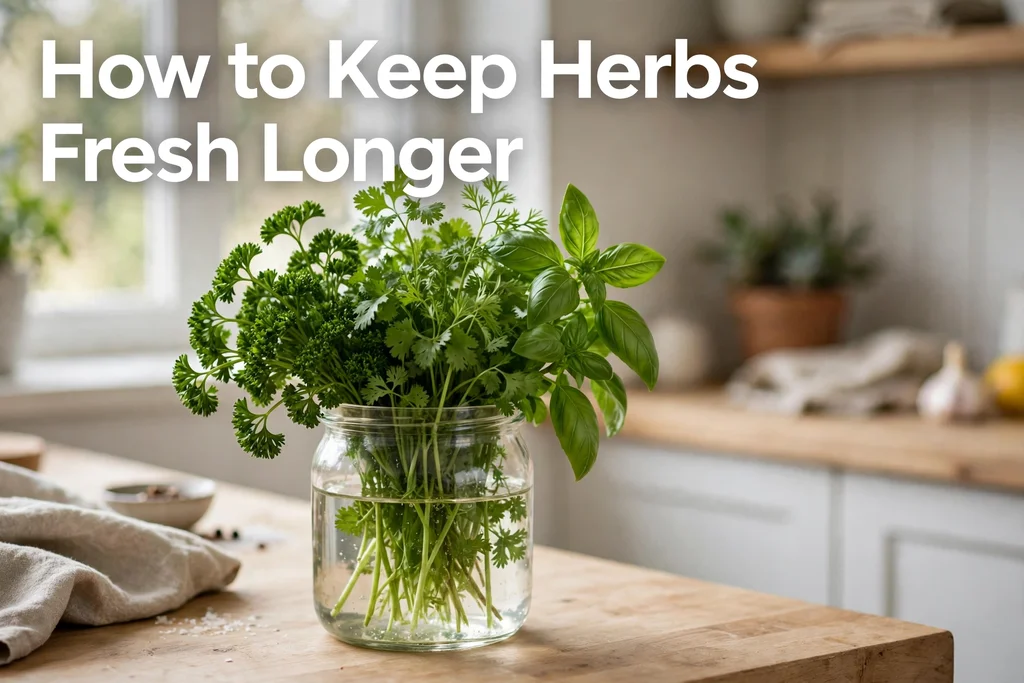
How to Keep Herbs Fresh Longer: 7 Storage Tricks That Work
Fresh herbs are the fastest way to make a meal taste like you tried harder than you did — and the fastest thing in the fridge to turn into a sad, slimy bunch. Parsley wilts in two days, cilantro goes limp by the weekend, and basil turns black if you so much as look at it wrong. The fix is not a special container or a gadget. It is sorting your herbs into the right groups and storing each group the way it actually wants to live. Done right, most herbs last 10 to 14 days, and the woody ones last two to four weeks.
The first thing to understand is that not all herbs are the same. Tender herbs — parsley, cilantro, dill, mint, and chives — have soft stems and high water content, and they behave like cut flowers. Woody herbs — rosemary, thyme, sage, and oregano — have stiff stems and lower moisture, and they prefer things drier. Basil is in a category of its own: it is cold-sensitive and blackens in the fridge. Once you know which group an herb belongs to, the storage method follows naturally.
1. The Jar of Water Method (Tender Herbs)
For parsley, cilantro, dill, and mint, treat the bunch like a bouquet. Trim about half an inch off the bottom of the stems with sharp scissors, remove any wilted or yellow leaves, then stand the bunch upright in a glass or jar with one to two inches of water at the bottom. Drape a plastic bag loosely over the leaves, and set the jar in the refrigerator. Change the water every two to three days to prevent bacterial growth. In side-by-side kitchen tests, cilantro stored this way stayed crisp and green for nine days or more — nearly double the life of herbs left loose in a crisper drawer. Parsley and cilantro kept this way often reach 10 to 14 days.
2. The Damp Paper Towel Method (Mixed and Woody Herbs)
When fridge space is tight, or you are storing a mix, the damp paper towel wrap is the best all-rounder. Lay a clean paper towel flat and dampen it lightly — wring it out until it is moist but not dripping. Arrange the herbs in a single layer, fold the towel over them to enclose them, and place the bundle inside a resealable bag or airtight container in the crisper drawer. The towel acts as a moisture buffer: it absorbs excess condensation while keeping the leaves from drying out. Herbs stored this way typically last 7 to 10 days. For woody herbs like rosemary, thyme, sage, and oregano, use a barely damp towel rather than a wet one, and they will often last two to four weeks — significantly longer than tender herbs.
3. Keep Basil on the Counter, Never in the Fridge
Basil is the one exception to every fridge rule. It is sensitive to cold: refrigerator temperatures cause cellular damage that turns its leaves black within 24 to 48 hours. Keep basil at room temperature, stems in an inch of water like cut flowers, loosely covered with a plastic bag, away from direct sunlight. Change the water every two days. Kept this way, basil lasts one to two weeks. If you have ever wondered why your basil died in the fridge while everything else survived, this is why.
4. Do Not Wash Herbs Until You Use Them
Water left on the leaves is the enemy. Excess moisture encourages the bacteria and mould that turn herbs slimy, and washing before storage adds exactly that moisture. Store herbs dry, and wash them only right before cooking, then dry them well — a salad spinner or a gentle pat with a clean towel works. The same rule applies to the damp towel method: the towel should be moist, not wet. If you can squeeze water out of it, it is too wet.
5. Remove the Bad Leaves First
One rotting leaf can spoil the bunch. Before storing, pick through the herbs and remove any yellowed, wilted, or slimy leaves, and trim any brown stem ends. Decay spreads from leaf to leaf in a sealed container, so five minutes of sorting at the start buys you several extra days at the end. Check the bundle every few days and pull out anything that has turned — and refresh the paper towel if it has become too wet or too dry, usually every three or four days.
6. Freeze What You Will Not Use in a Week
If you know you will not cook with a bunch within the week, freeze it rather than watching it wilt. The easiest method is to chop the herbs, pack them into an ice cube tray, cover with olive oil or water, and freeze. Pop the cubes into a bag, and drop them straight into soups, stews, sauces, and sautés — no thawing needed. Frozen herbs lose their texture, so they are not for salads or garnish, but their flavour holds up well for months. Woody herbs like rosemary and thyme also freeze well whole, in a bag with the air pressed out.
7. Buy Fresh, and Consider Growing Your Own
Storage can only preserve the freshness an herb already has. Herbs that are already declining at the store will last days, not weeks, no matter how you store them. Buy bunches with bright, perky leaves and firm stems, and avoid anything with dark spots, yellowing, or a slimy feel. And the most effective solution of all is to eliminate storage entirely: a small pot of basil, parsley, or mint on a windowsill means cutting only what you need, only when you need it. Mint in particular is famously vigorous — keep it in its own pot, or it will take over the garden.
How Long Does Each Herb Last?
As a rough guide with the right method: parsley and cilantro in a water jar last 10 to 14 days; dill lasts about a week; mint lasts one to two weeks; chives wrapped in a damp towel last one to two weeks; basil on the counter lasts one to two weeks; and woody herbs like thyme, rosemary, sage, and oregano last two to four weeks. These are guides, not guarantees — the herb's condition when you bought it matters as much as the method. But the pattern is consistent: the right storage roughly doubles or triples the life you would get from leaving the bunch loose in the crisper drawer.
Quick Summary
Sort herbs before storing them. Tender herbs like parsley, cilantro, dill, and mint last longest standing in a jar of water in the fridge, loosely covered, with the water changed every two to three days — usually 10 to 14 days. Woody herbs like rosemary and thyme prefer a barely damp paper towel in a sealed container, lasting two to four weeks. Basil never goes in the fridge; it blackens in the cold and lives on the counter in water. Wash herbs only before use, remove bad leaves first, and freeze what you will not cook within a week.
Frequently Asked Questions
Why does basil turn black in the fridge?
Basil is cold-sensitive. Refrigerator temperatures damage its cells, and the leaves blacken within 24 to 48 hours. Store basil at room temperature with its stems in water, loosely covered, away from direct sunlight.
How long do fresh herbs last in the fridge?
With the right method, about 10 to 14 days for tender herbs in a water jar or damp towel, and two to four weeks for woody herbs in a barely damp towel. Left loose in the crisper drawer, most herbs last only a few days.
Should I wash herbs before storing them?
No. Wash herbs only right before use and dry them well. Extra moisture on the leaves encourages the bacteria and mould that make herbs slimy, so store them dry.
Can I freeze fresh herbs?
Yes. Chop them, pack them into an ice cube tray, cover with olive oil or water, and freeze. The cubes go straight into soups, stews, and sauces. Frozen herbs lose their texture, so they are best for cooking rather than salads or garnish.
Related Guides
- How to Keep Bananas Fresh Longer: 7 Storage Tricks That Actually Slow Ripening
- How Long Do Eggs Last in the Fridge? The USDA Timelines, Explained
- Get Rid of Ants in Your Kitchen: 5 Easy and Natural Ways
External Resources
More in Home & Life
How Long Do Eggs Last in the Fridge? The USDA Timelines, Explained
How Long Do Eggs Last in the Fridge? The USDA Timelines, Explained Open the fridge, spot a carton you bought weeks ago, and the same question comes up every time: are these eggs still good, or is it…
How to Keep Bananas Fresh Longer: 7 Storage Tricks That Actually Slow Ripening
How to Keep Bananas Fresh Longer: 7 Storage Tricks That Actually Slow Ripening You buy a bunch of green bananas on Monday, and by Thursday they are speckled, soft, and racing toward banana bread…
How Long Do Leftovers Last in the Fridge? The 3–4 Day Rule, Explained
How Long Do Leftovers Last in the Fridge? The 3–4 Day Rule, Explained Almost everyone has played the same fridge-door game: open a container of unknown age, sniff it, shrug, and decide it is probably…