
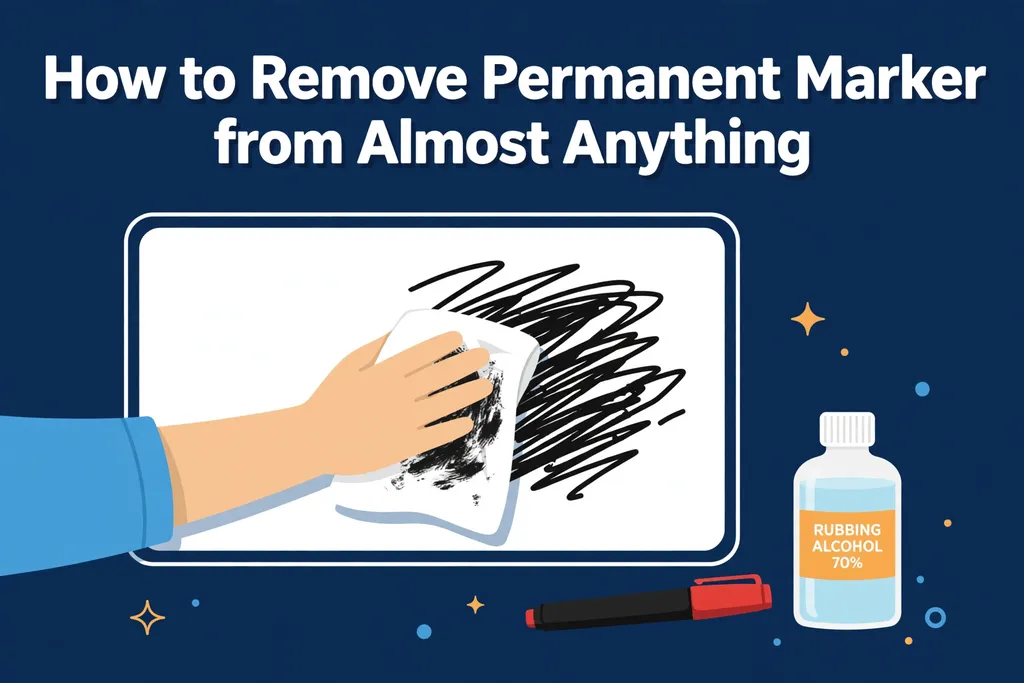
How to Remove Permanent Marker from Almost Anything: 6 Methods by Surface
Here is the secret the name hides: permanent marker is only permanent against water. Its ink is pigment locked in a resin that dissolves in alcohol — which means the bottle of rubbing alcohol under your sink defeats almost every "permanent" mark ever made. The trick is matching the method to the surface, because the cleaner that saves a whiteboard can wreck a wood finish. Here is how to remove permanent marker from just about anything.
Method 1: Rubbing Alcohol — The Default Answer
For hard, non-porous surfaces — glass, metal, ceramic, most plastics, laminate counters — start here. Dampen a cloth or cotton ball with 70% isopropyl alcohol, rub the mark in small circles, and watch the ink lift and transfer to the cloth. Rotate to a clean patch of cloth as it loads with ink, and let the alcohol sit on stubborn marks for a minute before wiping. It evaporates cleanly and leaves no residue.
Method 2: The Dry-Erase Marker Trick (Whiteboards and Glossy Surfaces)
Someone used the wrong marker on the whiteboard? Draw over the permanent mark with a dry-erase marker, covering it completely, then erase immediately while the ink is still wet. Dry-erase ink contains a solvent that reactivates the permanent ink underneath, and the eraser lifts both layers together. Use a fresh, dark-coloured dry-erase marker (a dried-out one lacks the solvent), and repeat on any ghost that remains.
Method 3: Hand Sanitizer and Hairspray — The Stand-Ins
No rubbing alcohol in the house? Alcohol-based hand sanitizer (typically 60–70% alcohol) works the same way, and its gel consistency is actually an advantage on vertical surfaces — it stays where you put it instead of running. Alcohol-based hairspray is the old-school stand-in: spray until the mark is wet, blot, repeat. One caution: many modern hairsprays are alcohol-free, and those will do nothing. Check the ingredients for alcohol near the top.
Method 4: Clothes and Fabric — Blot, Never Rub
Fabric changes the technique, not the chemistry. Place a clean cloth or stack of paper towels under the stain to catch the ink, then dab the mark from above with a cotton ball soaked in rubbing alcohol. The ink dissolves and transfers downward into the under-cloth — move it as it gets dirty so you are not pressing ink back in. Blot, never rub: rubbing spreads the stain and drives it deeper. Keep going until no more ink transfers, then wash as usual — and do not put the garment in a hot dryer until the mark is fully gone, because heat sets what is left.
Method 5: Walls, Wood, and Skin — The Gentle Routes
Painted walls: a melamine foam sponge (the "magic eraser" type) used gently is the standard fix — test first, because it is a mild abrasive and can dull glossy paint. Non-gel white toothpaste is the gentler backup. Finished wood: be careful — alcohol can soften some finishes. Test in a hidden spot first, work briefly, and wipe dry immediately; if the finish clouds, stop and try a small amount of toothpaste instead. Skin: hand sanitizer or an oil-based product like baby oil lifts marker safely; this is also the method for a toddler who has decorated themselves.
Method 6: Acetone — The Last Resort
Nail polish remover (acetone) is the strongest solvent on this list and will strip marks that resist alcohol. It is also the riskiest: acetone can melt or cloud some plastics, strip paint, and damage finishes. Reserve it for glass, metal, and other bombproof surfaces, apply a tiny amount on a cloth corner — never pour it on — test in a hidden spot, and wipe the area with water afterward. If alcohol has not worked and the surface matters to you, acetone is where DIY stops and caution starts.
Quick Summary
Permanent marker ink dissolves in alcohol, so rubbing alcohol is the default fix for hard surfaces. On whiteboards, scribble over the mark with a dry-erase marker and erase both layers. For fabric, blot with alcohol over an absorbent under-cloth and never rub or apply heat early. Walls and wood call for gentle methods (melamine sponge, toothpaste), skin for sanitizer or baby oil — and acetone stays the tested-first, last-resort option.
Frequently Asked Questions
Does hand sanitizer really remove permanent marker?
Yes — most hand sanitizers are 60–70% alcohol, which dissolves permanent marker ink the same way rubbing alcohol does. The gel form is especially handy on vertical surfaces because it clings instead of running.
How do you get permanent marker off a whiteboard?
Colour completely over the mark with a fresh dry-erase marker, then erase immediately while it is wet — the dry-erase solvent reactivates the permanent ink so both layers lift together. Rubbing alcohol also works.
Will rubbing alcohol damage wood furniture?
It can soften or cloud some finishes, which is why you should always test in a hidden spot first, work quickly, and wipe dry. If the finish reacts, switch to gentle toothpaste instead.
How do you remove permanent marker from clothes?
Blot — never rub — with rubbing alcohol, with a clean cloth underneath to absorb the ink as it lifts. Repeat with clean cloth sections until no ink transfers, then wash. Keep the garment out of a hot dryer until the stain is gone.
Related Guides
- How to Get Rid of Fruit Flies: 6 Methods That Actually Work
- Get Rid of Ants in Your Kitchen: 5 Easy and Natural Ways
- Fix a Leaky Kitchen Faucet in 5 Powerful Easy Steps
External Resources
More in How-To & Fixes

Why Does My Smoke Detector Keep Chirping? 5 Causes and the Fixes
Why Does My Smoke Detector Keep Chirping? 5 Causes and the Fixes It never starts at noon. It starts at 3 a.m. — one chirp, every minute or so, from a detector you cannot quite locate in the dark. Why…
How to Get Rid of Fruit Flies: 6 Methods That Actually Work
How to Get Rid of Fruit Flies: 6 Methods That Actually Work One forgotten banana on Monday can mean a cloud of tiny flies by Friday. Fruit flies seem to materialize from nowhere because their life…
7 Simple Ways to Unclog a Slow-Draining Bathroom Sink (Fast & Safe)
Need to unclog a slow-draining bathroom sink? This guide walks you through fast, safe methods—from boiling water to cleaning the P-trap—so you can restore flow without calling a plumber. Whether the…