
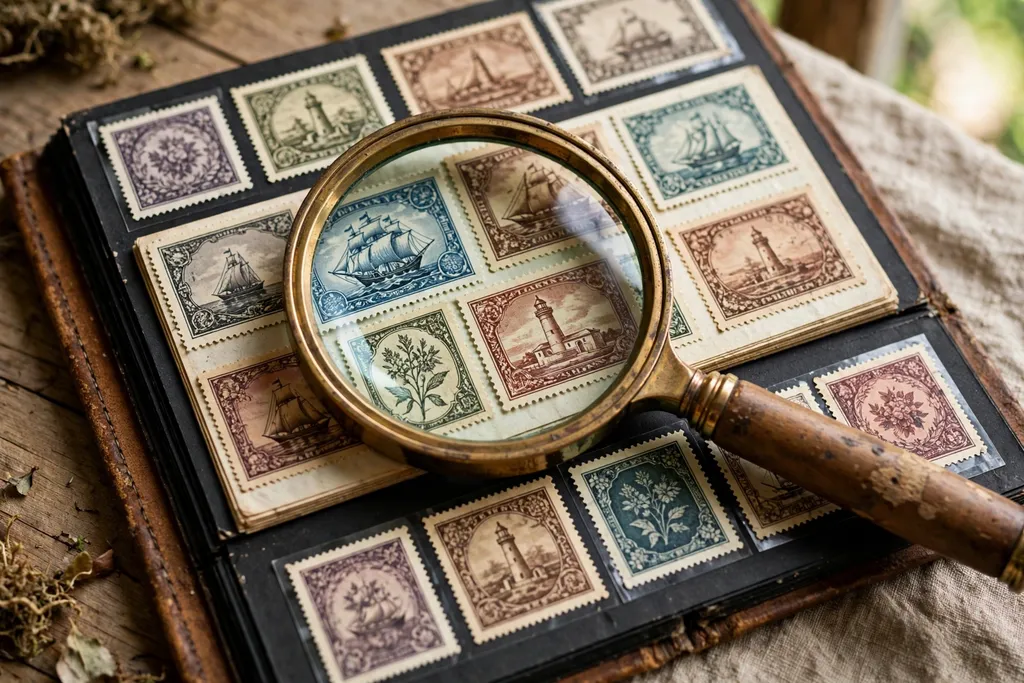
How to Tell If a Stamp Is Worth Money: 7 Checks Before You Sell
An inherited album, a shoebox from the attic, a childhood collection rediscovered in a drawer — is any of it actually worth something? Most stamps are not. Billions were printed, millions survived, and the ordinary stamps of everyday mail are common by design. But some stamps are genuinely valuable, and the difference between a treasure and a curiosity usually comes down to a handful of checkable details. So how to tell if a stamp is worth money? Work through these seven checks before you sell anything, and you will know which stamps deserve a professional opinion and which are simply nice pieces of postal history to enjoy.
Check 1: How Rare Is It, Really?
Rarity is the starting point, but it is also the most misunderstood factor in stamp values. Age alone does not make a stamp rare. A stamp printed in the millions and used on everyday letters for years is common no matter how old it is, because so many copies survived. True scarcity comes from a small original printing, a short period of use, a stamp withdrawn soon after issue, or a stamp from a place or period that produced very little mail. A stamp from a short-lived postal authority or a brief historical moment can be far scarcer than a much older stamp from a large, stable postal system.
Demand matters just as much as supply. A scarce stamp that nobody collects is a curiosity, not a valuable item. The stamps that command real attention are the ones where scarcity meets an active collecting field: a popular country, a well-studied period, or a famous series that many collectors are trying to complete. Before you assume rarity, identify the stamp properly — country, year, and design variety — using a standard catalogue such as Scott or Stanley Gibbons, available at many public libraries. Identification comes first; valuation is impossible until you know exactly what you hold.
Check 2: Grade the Condition Honestly
Condition is where most sellers lose money, usually by overestimating it. For unused stamps, collectors prize mint never hinged condition: the stamp has its full original gum on the back, undisturbed, exactly as it left the post office. A stamp that was once mounted with a hinge — a small gummed tab used to fix it into an album — will show a hinge mark or disturbed gum, and that lowers its value. For used stamps, the equivalent is a clean, complete stamp with fresh colour and no damage from its time on an envelope.
Look closely at every element. Centring matters: the design should sit evenly within its margins, with roughly equal white space on all four sides. Poorly centred stamps, where the design crowds one edge or cuts into another, are worth less than well-centred copies of the same stamp. Check the perforations — the small holes around the edge — for missing teeth, short perforations, or tears. Look for thins (where paper has been rubbed away on the back), creases, tears, stains, fading, and toning from age or poor storage. Any one of these faults can sharply reduce value, and several together can reduce it to almost nothing, even for a scarce stamp.
Two warnings belong here, because they are the most common ways good stamps get ruined. First, do not clean a stamp. Washing, bleaching, or pressing a stamp to improve its look almost always damages it, and experienced buyers can usually tell. Second, do not tear stamps off envelopes in a hurry. Soaking a stamp off paper is a skill, and doing it carelessly causes thins, tears, and lost perforations. If a stamp is on an envelope or a piece of postal history, leave it alone until you know whether the whole item is worth more intact than the stamp alone — often, it is.
Check 3: Look for Printing Errors and Inverts
Errors are the most exciting check, and the one most likely to turn an ordinary-looking stamp into something special. A printing error is a mistake made during production: a missing colour, a colour printed in the wrong place, a design printed upside down relative to the rest of the stamp (an invert), or a stamp printed on the wrong paper. Because quality control usually catches these, error stamps survive in small numbers, and collectors pay close attention to them.
That said, not every odd-looking stamp is an error. Misprints caused by wear, damage, or later alteration are common, and genuine errors are rare precisely because they are hard to produce by accident in a convincing way. If you think you have an error, do not trim, clean, or "improve" it, and do not assume a catalogue value applies to your copy — errors are often valued individually, based on how dramatic the error is and how many examples are known. This is one check where a professional opinion early on can save you from either underselling a rarity or overclaiming an ordinary stamp.
Check 4: Check the Watermark and Paper
A watermark is a faint design pressed into the paper during manufacture, visible when the stamp is held up to light or viewed with watermark fluid on a dark tray. Many stamps that look identical at first glance were printed on differently watermarked paper, and the watermark variety can be the difference between a common stamp and a scarce one. Two stamps with the same design, colour, and perforations may carry different watermarks, and collectors treat them as different stamps with different values.
Learning to read watermarks takes practice and the right tools: a watermark tray and fluid, or a modern electronic watermark detector, plus a catalogue that lists which watermarks belong to which issue. Paper matters too. Some issues were printed on thick, thin, chalky, or fluorescent paper, and those differences can again separate a common variety from a scarce one. If your stamp matches a design that exists in several watermark or paper varieties, identifying the variety correctly is essential before any value can be discussed — and it is a step many casual sellers skip entirely.
Check 5: Read the Cancellation and Postmark
For used stamps, the cancellation — the mark applied by the post office to prevent reuse — is part of the stamp's story, and sometimes part of its value. A light, neat cancellation that leaves the design clearly visible is generally preferred to a heavy, smeared blot that obscures the stamp. Collectors also value cancellations that are interesting in their own right: a clear postmark from a small or short-lived post office, a dated cancellation from a significant historical moment, or a special pictorial cancellation from an event.
The envelope matters here as well. A stamp on its original cover, with a legible postmark, address, and any postal markings, is a piece of postal history, not just a stamp. Removing the stamp destroys that context, and with it, sometimes most of the value. If the cover tells a story — a wartime letter, a first-day usage, a route that no longer exists — keep the whole item together and have it assessed as a cover, not as a loose stamp. As with the cleaning warning, the rule is simple: when in doubt, do not separate, soak, or trim anything until someone knowledgeable has seen it.
Check 6: Is the Set Complete?
Many stamps were issued as part of a set: a series of designs released together, often with values ranging from low to high. Collectors usually want the whole set, and a complete set is typically worth more than the sum of its individual stamps sold separately — particularly when the set includes a high-value stamp that was printed in smaller numbers and used less often. The top value in a set, sometimes called the key value, is often the hardest to find in good condition, because fewer were printed and fewer survived.
Check your album against the catalogue listing for the set. Are all the values present? Are they in matching condition, or is one stamp the weak link? A set missing its key value is a partial set, and its value drops accordingly. Conversely, if you hold a complete set in uniformly good condition, with matching centring and no faults, say so clearly when you seek an appraisal or list it for sale — completeness is a selling point that buyers actively look for, and it is easy to undersell by describing stamps one by one without mentioning that they form a set.
Check 7: Get a Reputable Appraisal or Auction Estimate
After your own seven checks, the final step is an outside opinion — but choose it carefully, because not all opinions are equal. A catalogue value is a reference figure for a stamp in a stated condition, not a promise of what a buyer will pay. A dealer's purchase offer will be lower than a retail price, because the dealer must resell at a profit. An auction estimate reflects what the auction house thinks the stamp might achieve at auction, before commission and fees. These are different numbers answering different questions, so be clear about which one you are asking for: a sale price, an insurance value, or an estate value.
Look for an appraiser or dealer who is a member of a recognized philatelic body, such as the American Philatelic Society, and ask how the opinion is reached: identification, condition grading, comparable recent sales, and any fees or commission involved. Get the opinion in writing for anything of substance, and get a second opinion before selling a stamp you believe is significant. A reputable appraiser will explain the reasoning, flag uncertainty where identification is difficult, and tell you plainly if a collection is mostly common material. That honesty is itself a sign you have found the right person — and it protects you from both underselling a rarity and overpaying for a flattering valuation.
Quick Summary
A stamp is worth money when scarcity meets demand, condition, and completeness. Check rarity first, then grade condition honestly — mint never hinged for unused stamps, good centring, intact perforations, and no tears, thins, or stains. Look for printing errors and inverts, identify the watermark and paper variety, and read cancellations and postmarks, keeping stamps on their original covers where the cover adds history. Complete sets, especially with their key values, are worth more than partial ones. Finally, get a reputable appraisal or auction estimate, and never clean a stamp or tear it off an envelope carelessly.
Frequently Asked Questions
Does an old stamp automatically have value?
No. Age alone does not make a stamp valuable. Millions of copies of many older stamps were printed and survived, so they remain common. Value comes from scarcity combined with demand, condition, and completeness.
What is the difference between mint and used stamps?
A mint stamp is unused, with its original gum intact on the back; mint never hinged means that gum has never been disturbed by a mounting hinge. A used stamp has been through the mail and carries a cancellation or postmark, which can add or reduce value depending on its clarity and interest.
Should I clean a stamp or soak it off an envelope?
No, not without advice. Cleaning usually damages a stamp, and careless soaking causes tears, thins, and lost perforations. A stamp on its original cover may also be worth more intact as postal history, so leave it alone until someone knowledgeable has assessed it.
Where should I get a stamp collection appraised?
Seek a dealer or appraiser who is a member of a recognized philatelic body, such as the American Philatelic Society, and ask for the opinion in writing. Get a second opinion before selling anything you believe is significant, and be clear whether you need a sale price, an insurance value, or an estate value.
Related Guides
- How to Tell If a Vinyl Record Is Worth Money: 7 Checks Before You Sell
- How to Tell If a Baseball Card Is Worth Money
- How to Tell If a Comic Book Is Worth Money
External Resources
More in Collectibles
How to Tell If a Vinyl Record Is Worth Money: 7 Checks Before You Sell
How to Tell If a Vinyl Record Is Worth Money: 7 Checks Before You Sell That crate in the attic, the shelf of albums you inherited, the box you picked up at a garage sale — is any of it actually worth…

How to Tell If a Comic Book Is Worth Money: 7 Checks Before You Sell
How to Tell If a Comic Book Is Worth Money: 7 Checks Before You Sell Somewhere between the attic boxes and the long boxes at the comic shop sits the same question baseball card collectors ask: is any…

Are Beanie Babies Worth Anything? The Honest Answer (It's Not $500,000)
Are Beanie Babies Worth Anything? The Honest Answer (It's Not $500,000) Search for the Princess Diana Beanie Baby and you will find listings asking $500,000 — sometimes more. Then check what one…