
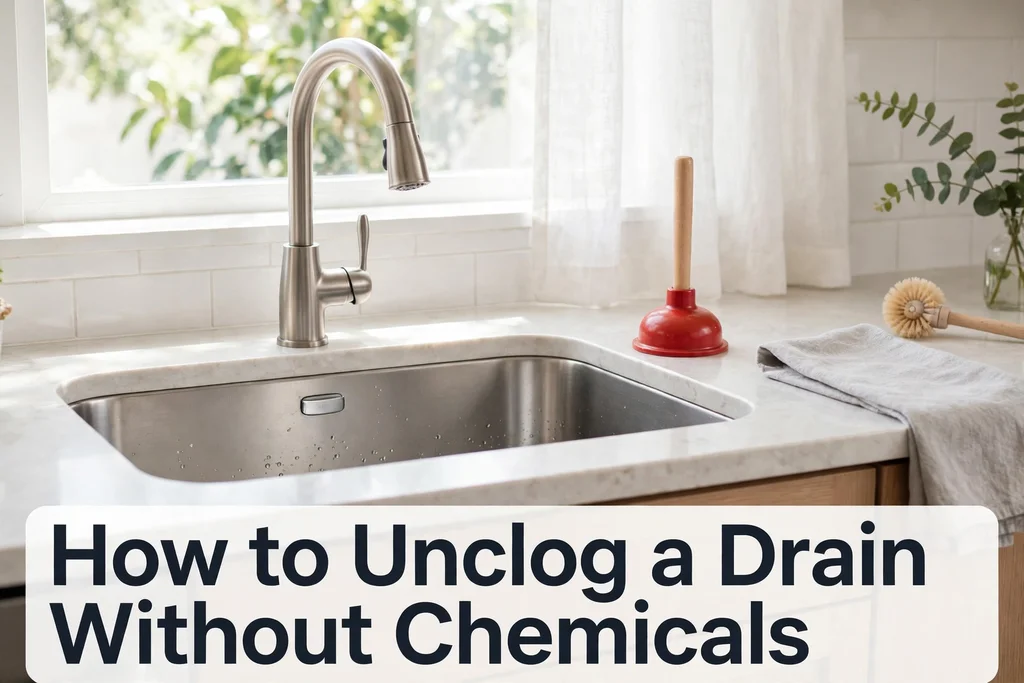
How to Unclog a Drain Without Chemicals: 6 Methods That Actually Work
A slow drain is one of those small household problems that gets worse the longer you ignore it. The water pools, the smell creeps in, and eventually the sink stops draining at all. The bottle of chemical drain cleaner under the sink promises a quick fix, but it is harsh on your pipes, dangerous to handle, bad for the environment, and often does not even work on the clog you have. The good news is that most clogs come from grease, soap scum, and hair, and those respond well to simple mechanical methods. Here are six, ordered from gentlest to most hands-on, and most household clogs clear within the first three.
Before you start, one safety note matters more than any method: if you have already poured chemical drain cleaner down the drain, do not follow it with these methods and do not open the trap. The standing caustic liquid is dangerous. Wait it out, or call a plumber.
1. Hot Water First
Start with the simplest fix. Boil a full kettle of water and pour it slowly, in stages, down the drain, pausing a few seconds between pours to let it work. The heat melts grease and loosens soap scum, which are the two most common causes of a slow kitchen drain. One caution: do not pour boiling water into PVC pipes if you can avoid it — very hot water can soften them — and do not pour it into a porcelain sink that might crack. For plastic plumbing, the hottest tap water you have is a safer middle ground, or let kettle water cool for a few minutes first. Metal pipes handle boiling water without complaint.
2. Baking Soda and Vinegar — With Honest Expectations
The classic home remedy is about half a cup of baking soda poured into the drain, followed by about half a cup of white vinegar. Cover the opening with a plug or a wet cloth to keep the fizz going down, wait about 15 minutes, then flush with hot tap water. It is safe for pipes and cheap, and it genuinely helps with light buildup and odours. But be honest about what it does: the fizzing looks impressive, yet the reaction mostly produces water, carbon dioxide, and a little sodium acetate. It does not dissolve hair, and it barely touches thick grease. The fizz happens near the top of the pipe, where the ingredients first meet, so it never reaches a blockage sitting deeper down. Many people finish with boiling water and credit the baking soda and vinegar, when the hot water did most of the work. Use this method for maintenance and smells, not for a solid clog.
3. The Cup Plunger
Mechanical pressure clears many clogs that no liquid can touch, and the plunger is often the single most effective step. Use a cup plunger — the flat kind — not a toilet flange plunger, which is not designed for a flat sink. A plunger only works if the pressure has nowhere else to go, so seal any other openings first: stuff a wet cloth firmly into the overflow hole near the rim of the basin, and block a second sink basin if the drain is shared. Run enough water to cover the plunger cup by a couple of centimetres; a thin smear of petroleum jelly on the rim helps it seal. Seat the plunger over the drain and give 15 to 20 steady push-and-pull strokes without breaking the seal, then lift it off sharply. Repeat three or four times. If the water starts draining faster, run hot tap water for a minute to carry the loosened material away.
4. A Drain Snake or Zip-It Tool
For clogs deeper than the plunger can reach, feed a plastic drain snake — a thin barbed strip sold cheaply in hardware stores — into the opening. Push it in, twist it, and pull it out slowly. What comes up is unpleasant, so wear rubber gloves. A bent wire hanger with a small hook at the tip works as a rough substitute for a shallow clog. For deeper or tougher blockages, a hand-crank drain auger reaches several feet into the pipe and can break up or hook a clog the strip cannot. Work gently: forcing a snake can damage pipes, especially older ones.
5. Open and Clean the P-Trap
If plunging and snaking fail, the clog is probably sitting in the trap — the curved section of pipe under the sink. Put a bucket underneath, unscrew the slip nuts by hand or with channel-lock pliers, and let the water in the trap drain into the bucket. Pull out whatever is inside, scrub the trap with an old toothbrush, and reassemble it, making sure the washers sit properly so it does not leak. This is the messiest step, but it is also the most definitive: once you have the trap in your hands, you can see exactly what was blocking it, and the drain usually runs perfectly afterwards.
6. A Wet/Dry Vacuum
If you own a wet/dry shop vacuum, it can sometimes pull a clog out from above. Set it to vacuum liquids, make a tight seal around the drain with an old rag, and let it pull. This works best on clogs near the drain opening and on tubs and sinks where the blockage is mostly loose material. It is not a cure for a deep or solid blockage, but it is worth trying before calling a professional, especially since it costs nothing if you already own the vacuum.
When to Call a Plumber
Some problems are beyond the reach of home methods. Call a plumber if more than one drain is backing up at once — that points to a blockage in the main line, and plunging one sink can push dirty water out of the lowest drain in the house. Call one too if the drain backs up repeatedly after clearing, if you hear gurgling from other fixtures, or if you suspect a broken pipe or a tree root in the line. Those are not clogs; they are plumbing problems, and no amount of hot water will fix them.
Keeping Drains Clear
Prevention is cheaper than any fix. Use a strainer in every sink and tub to catch hair and food. Never pour cooking grease down the drain — let it cool and put it in the garbage or a sealed container. Run hot tap water for a few seconds after washing greasy dishes. Once a month, flush each drain with hot water and a little dish soap to keep grease from building up. None of this is glamorous, but a drain that never clogs is worth far more than a dramatic rescue.
Quick Summary
Most clogs clear without chemicals if you work from gentlest to most hands-on: hot water first (use hot tap water, not boiling, on PVC pipes), then baking soda and vinegar for light buildup and odours, then a cup plunger with the overflow sealed, then a drain snake, then cleaning the P-trap. Baking soda and vinegar cannot dissolve hair or thick grease — the fizz happens too high in the pipe. If multiple drains back up at once, or a cleared drain keeps clogging, call a plumber: that points to a main-line problem, not a simple clog.
Frequently Asked Questions
Does baking soda and vinegar really unclog a drain?
Only for light buildup and odours. The fizzing reaction produces mostly water and carbon dioxide, and it happens near the drain opening, so it cannot dissolve a solid hairball or a lump of set grease. A plunger or a drain snake is far more effective on a real clog.
Can I use boiling water on any drain?
No. Boiling water is fine for metal pipes, but it can soften PVC and loosen its joints, and it can crack porcelain. For plastic plumbing or a porcelain fixture, use the hottest tap water you have, or let kettle water cool for a few minutes.
What kind of plunger should I use on a sink?
A cup plunger, the flat kind. A toilet plunger has an extra flange underneath designed for a toilet bowl, and it will not seal properly on a flat sink. Seal the overflow hole with a wet cloth first, and use 15 to 20 steady strokes.
Is it safe to mix drain cleaners?
Never mix drain cleaners with each other or with vinegar, bleach, or ammonia. Some combinations release toxic gas, and others generate dangerous heat. If you have already used a chemical cleaner, do not plunge or open the trap — wait, or call a plumber.
Related Guides
- How to Clean a Burnt Pot Without Scrubbing for Hours
- How to Remove Sticker Residue from Almost Anything: 6 Methods That Work
- 7 Simple Ways to Unclog a Slow-Draining Bathroom Sink (Fast & Safe)
External Resources
More in How-To & Fixes
How to Clean a Burnt Pot Without Scrubbing for Hours
How to Clean a Burnt Pot Without Scrubbing for Hours Every cook has done it: a phone call, a knock at the door, a moment of distraction, and dinner has welded itself to the bottom of a favourite pot…
How to Remove Sticker Residue from Almost Anything: 6 Methods That Work
How to Remove Sticker Residue from Almost Anything: 6 Methods That Work The sticker came off. The glue did not. Now you have a jar, a laptop, a book, or a window with a tacky patch that collects dust…
How to Remove Permanent Marker from Almost Anything: 6 Methods by Surface
How to Remove Permanent Marker from Almost Anything: 6 Methods by Surface Here is the secret the name hides: permanent marker is only permanent against water. Its ink is pigment locked in a resin…