
Why Do We Get Goosebumps? The Ancient Reflex Behind the Shiver
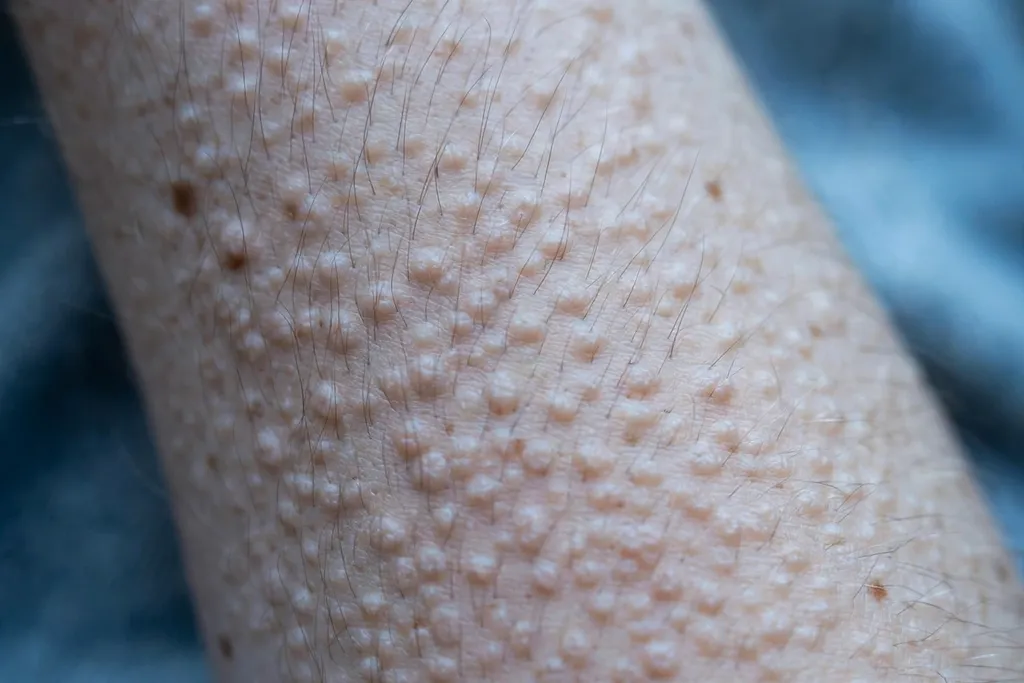
Step out into a cold wind, hear a song that hits you just right, or watch a moment of unexpected kindness in a film, and your skin responds before you have time to think about it. Tiny bumps rise on your arms, the fine hairs stand on end, and a shiver runs through you. So why do we get goosebumps? The answer reaches back much further than our own species. Goosebumps are an ancient reflex we inherited from furry ancestors, driven by tiny muscles at the base of every hair follicle. In us, it is largely a leftover.
The Tiny Muscles Behind the Bumps
Underneath every hair on your body sits a hair follicle, a small pocket in the skin that anchors the hair shaft. Attached to each follicle is a tiny band of smooth muscle called the arrector pili. Unlike the muscles in your arms and legs, which you control consciously, arrector pili are smooth muscle, and you cannot flex them on purpose. They take their orders from the sympathetic nervous system, the branch of the automatic nervous system that handles stress, arousal, and emergency responses.
When that system sends the signal, the arrector pili contract and shorten. Because each muscle runs at an angle from the follicle to the surrounding skin, shortening it tugs the follicle upright and pulls a small dimple of skin up with it. That dimple is the bump you see and feel. Multiply the effect across thousands of follicles firing at once, and the skin takes on the pebbled texture that reminded people of a plucked goose, which is where the name goosebumps comes from.
Cold: The Original Job
The oldest purpose of this reflex is temperature control. In a furry mammal, raising the hair creates a thicker layer of trapped air next to the skin, and still air is a good insulator. The fluffed-up coat slows heat loss, much like putting on a thicker sweater.
In humans the same machinery fires, but the result is far less useful. We lost most of our dense body hair over the course of evolution, so raising what remains traps almost no air and provides negligible insulation. That is why goosebumps are described as largely vestigial in people: the reflex is still there, but the coat it was designed to fluff up is gone. Shivering, which generates heat through muscle activity, does far more of the real warming work.
Fear: Looking Bigger to a Threat
Cold is only one trigger, because the sympathetic nervous system does not distinguish carefully between a drop in temperature and a sudden threat. When an animal is frightened or preparing to confront a rival, the same system fires, the arrector pili contract, and the raised fur makes the animal look larger and more intimidating.
Humans kept this part of the wiring too, which is why fear, surprise, and sudden stress can raise goosebumps even in a warm room. The feeling of the hairs on the back of your neck standing up during a tense moment in a film, or a startling noise in a dark house, is the same reflex firing for the same ancient reason. On a nearly hairless human the display is invisible, but the sensation remains.
Music, Awe, and Frisson
The most surprising trigger has nothing to do with temperature or danger at all. Many people get goosebumps from music: a soaring vocal, an unexpected harmony, a crescendo that resolves after a long build. Others feel them during moments of awe, such as witnessing an act of generosity, standing before a vast landscape, or watching a crowd move together. Researchers call this sensation frisson, from the French word for a shiver, and it is closely tied to the brain's reward and emotion systems.
The current understanding is that powerful emotional experiences activate many of the same arousal pathways as cold and fear, including the sympathetic nervous system, and the arrector pili respond as part of that broader wave. Heart rate and skin conductance often shift at the same moment the bumps appear, which suggests goosebumps are one visible sign of a whole-body emotional response rather than an isolated skin quirk. Some people experience frisson readily and often; others rarely do, and neither pattern indicates anything wrong.
Why the Reflex Survived in a Nearly Hairless Species
If goosebumps no longer keep us warm or make us look bigger, why has evolution not switched them off? Part of the answer is that the reflex is cheap: a tiny smooth muscle firing costs almost nothing, and there has been little pressure to remove it. But researchers have also found that the arrector pili are more than a leftover switch. Studies in mice have shown that these muscles help form a niche that supports hair follicle stem cells, the cells responsible for regenerating hair and repairing skin, and that the sympathetic nerves behind goosebumps also help regulate those stem cells over the longer term.
In other words, the wiring that produces a shiver on a cold night may also be part of the maintenance system that keeps skin and hair renewing themselves. It does suggest, though, that the reflex persists partly because its components are woven into other jobs that still matter.
When Goosebumps Are Worth Noticing
For most people, goosebumps are entirely normal and need no attention. They come and go with temperature, emotion, and startling moments, and they fade within seconds or minutes as the sympathetic system settles. There are a few patterns worth mentioning to a doctor, though not worrying about in advance: goosebumps that appear in one patch of skin only, that persist for a long time without a trigger, or that arrive together with other unexplained symptoms. Usually, though, goosebumps are exactly what they appear to be: an old reflex on a body that no longer quite needs it.
Quick Summary
Goosebumps are caused by arrector pili, tiny smooth muscles at the base of hair follicles, contracting under signals from the sympathetic nervous system and pulling the hairs upright, which dimples the surrounding skin. In furry animals this traps insulating air and makes the animal look larger to a threat; in humans, with sparse body hair, the effect is largely vestigial. Cold, fear, awe, and music can all trigger the reflex, because they all activate the same arousal pathways.
Frequently Asked Questions
What exactly causes goosebumps?
Goosebumps are caused by tiny smooth muscles called arrector pili contracting at the base of hair follicles. Each muscle pulls its follicle upright and dimples the surrounding skin, and thousands of follicles firing together create the bumpy texture.
Why do we get goosebumps when we are cold?
Because the reflex evolved to raise fur and trap a layer of insulating air next to the skin. In humans the effect is largely vestigial, since our body hair is too sparse to trap meaningful warmth, so shivering does most of the real warming work.
Can music really cause goosebumps?
Yes. Many people experience frisson, a shiver-like response, during powerful music, moments of awe, or emotionally moving scenes. These experiences activate the same sympathetic arousal pathways as cold and fear, so the arrector pili respond as part of that broader response.
Are goosebumps useful in humans?
Not much as insulation or intimidation, since we lack a dense fur coat. The reflex is largely vestigial in people, though the arrector pili and their nerves are also involved in maintaining hair follicle stem cells.
Related Guides
- Why Do We See Lightning Before We Hear Thunder? The Flash-to-Bang Rule, Explained
- Why Do Onions Make You Cry? The Chemistry of the Tear Gas in Your Kitchen
- Why Is the Ocean Salty? 6 Fascinating Facts About the Sea
External Resources
More in Facts & Explanations
Why Do Cats Purr? The Science Behind the Sound
Why Do Cats Purr? The Science Behind the Sound If you have ever had a cat settle on your lap, tuck its paws beneath itself, and start up that low, steady rumble, you know how soothing the sound can…

Why Do Onions Make You Cry? The Chemistry of the Tear Gas in Your Kitchen
Why Do Onions Make You Cry? The Chemistry of the Tear Gas in Your Kitchen Every cook knows the moment: the knife goes through the onion, and within seconds your eyes sting, water, and blur your…

Why Do We See Lightning Before We Hear Thunder? The Flash-to-Bang Rule, Explained
Why Do We See Lightning Before We Hear Thunder? The Flash-to-Bang Rule, Explained Watch any summer thunderstorm and the pattern is always the same: a brilliant fork of lightning splits the sky, and…