
Why Do We See Lightning Before We Hear Thunder? The Flash-to-Bang Rule, Explained
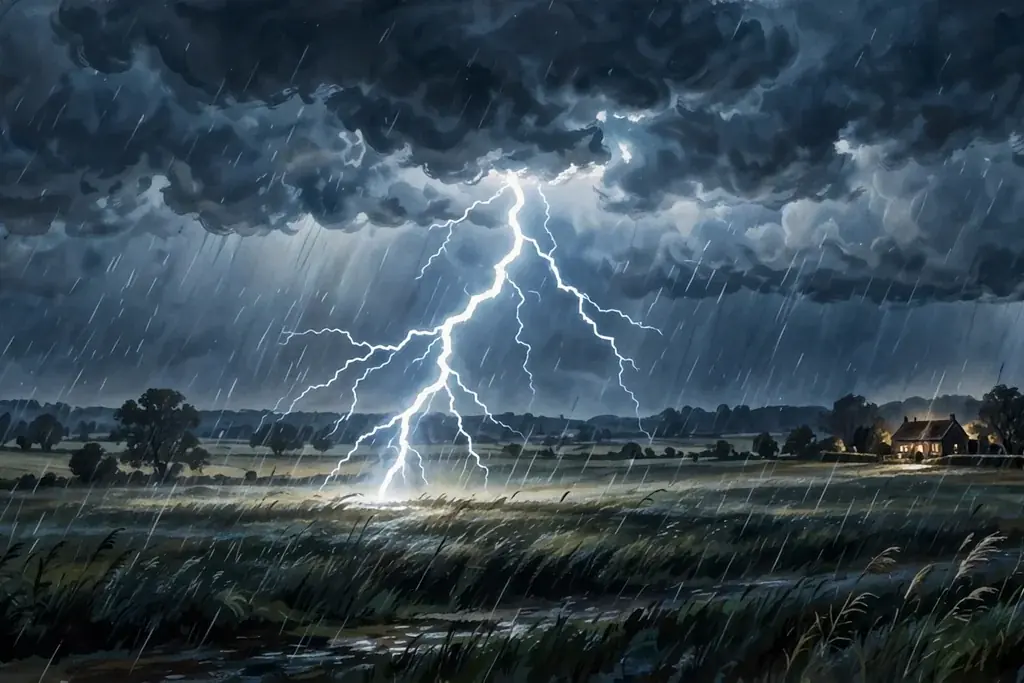
Watch any summer thunderstorm and the pattern is always the same: a brilliant fork of lightning splits the sky, and then — a beat, or several beats, later — the thunder rolls in. It feels as though the storm is sending two separate signals. In fact, it is sending one. So why do we see lightning before hearing thunder? Because light and sound leave the bolt at the same instant, but light travels so much faster that it wins the race by an enormous margin, and the delay between the two tells you something genuinely useful: roughly how far away the storm is.
The Short Answer: Same Bolt, Very Different Speeds
Lightning and thunder are not two events. They are two effects of a single discharge. When a lightning bolt rips through the air, it heats the channel around it to tens of thousands of degrees in a fraction of a second. The air expands violently, and that shock wave is thunder. The flash you see is the light from that same superheated channel. Both are created at the same instant, by the same discharge — but they travel to you at wildly different speeds.
Light moves at about 299,792 kilometres per second in a vacuum, and only slightly slower in air. Sound, by contrast, crawls along at roughly 343 metres per second in air at 20 degrees Celsius — about a million times slower. Over the few kilometres between you and a storm, light arrives effectively instantly, while sound takes several seconds to make the same trip. That is the whole mystery, and it is also the reason the gap between flash and bang is a useful measuring tool rather than just a curiosity.
The Flash-to-Bang Rule: Divide by Three
Here is the rule storm watchers have used for generations. Count the seconds between the flash and the thunder, then divide by three. The result is roughly the distance to the strike in kilometres. Five seconds between flash and bang means the bolt landed about one and a half kilometres away. Fifteen seconds puts it around five kilometres off. The imperial version works the same way: divide the seconds by five to get the distance in miles, which is why the old saying goes that five seconds means about one mile.
The rule is a rule of thumb, not a survey instrument. Sound travels a little faster in warm air than in cold air, and wind, humidity, and terrain can bend or muffle it. But for judging whether a storm is approaching or moving away, it is remarkably good. If the gap is shrinking from one flash to the next, the storm is getting closer. If it is growing, the storm is moving off. Either way, you are getting real information from nothing more than counting.
Why Thunder Rumbles Instead of Cracking
Close lightning makes a sharp crack. Distant lightning makes a long, rolling rumble. The difference comes from geometry. A lightning bolt is not a point; it is a jagged channel that can stretch for kilometres across the sky. The sound from the nearest part of the channel reaches you first, and the sound from the farthest parts arrives later, stretched out over seconds. Add echoes bouncing off clouds, hills, and buildings, and the sharp crack smears into the rolling thunder we associate with a storm at a distance.
This also explains why the rumble can seem to last so long. You are not hearing one sound dragging itself out. You are hearing the same event arriving from many different points along the bolt, one after another, like a crowd applauding just out of sync. The closer the bolt, the shorter the channel appears from your position, and the sharper the sound.
Why You Sometimes See Lightning but Hear Nothing
On a warm night you may watch a distant storm flicker on the horizon in complete silence. This is sometimes called heat lightning, though it is not a special kind of lightning at all — it is ordinary lightning too far away for its thunder to reach you. Sound weakens as it spreads, and beyond roughly 25 kilometres or so it usually fades below hearing, especially if hills, trees, or city noise get in the way. The light, on the other hand, can travel much farther, particularly when it reflects off high clouds.
So a silent light show does not mean the storm is harmless or that the thunder is somehow missing. It means the storm is far off — far enough that only the light survives the journey. It is also a reminder that the flash-to-bang rule has a limit: once the gap grows past about 30 seconds, the thunder may never arrive at all.
What the Delay Means for Safety
The delay is not just trivia; it is a safety signal worth taking seriously. A flash-to-bang gap of 30 seconds or less means the storm is close enough that lightning could strike near you, and the widely taught advice is to get indoors and stay there until 30 minutes after the last thunder you hear. Lightning can strike well ahead of the rain, and the first bolt of a storm is just as dangerous as the hundredth. If you can hear thunder at all, you are close enough to be at risk, no matter how blue the sky looks overhead.
The practical habit is simple: when you see a flash, start counting. One-one-thousand, two-one-thousand, and so on until the thunder arrives. Divide by three for kilometres, or by five for miles. Do it for a few flashes in a row and you will know whether the storm is advancing or retreating — and whether it is time to head inside.
Quick Summary
We see lightning before we hear thunder because both are produced by the same discharge at the same instant, but light travels at about 299,792 kilometres per second while sound manages only about 343 metres per second in air at 20 degrees Celsius. The gap between flash and bang measures distance: divide the seconds by three for kilometres, or by five for miles. A shrinking gap means the storm is approaching; a gap of 30 seconds or less means it is time to get indoors.
Frequently Asked Questions
Are lightning and thunder created at the same time?
Yes. A lightning bolt superheats the air around it, and that sudden expansion creates thunder. The flash and the sound are two effects of the same discharge, produced at the same instant — light simply reaches you first because it travels so much faster.
How do you calculate how far away lightning is?
Count the seconds between the flash and the thunder, then divide by three for the distance in kilometres, or by five for the distance in miles. Five seconds means roughly one mile away; fifteen seconds means roughly five kilometres away.
Why does thunder rumble instead of making one sharp sound?
Because a lightning bolt is a long, branching channel, not a single point. Sound from the nearest part reaches you first and sound from farther parts arrives later, and echoes off clouds and terrain stretch it further into a rolling rumble.
Why can I see lightning without hearing any thunder?
The storm is too far away. Sound fades as it spreads, and beyond roughly 25 kilometres it usually drops below hearing, while the light can still be seen — sometimes reflected off high clouds. This is often called heat lightning, but it is ordinary lightning at a distance.
Related Guides
- 5 Fascinating Facts About Why the Sky Is Blue
- Why Do We Always See the Same Side of the Moon? 7 Fascinating Facts About Tidal Locking
- How Earth Formed: 5 Incredible Stages That Shaped Our Planet
External Resources
More in Facts & Explanations

Why Do Onions Make You Cry? The Chemistry of the Tear Gas in Your Kitchen
Why Do Onions Make You Cry? The Chemistry of the Tear Gas in Your Kitchen Every cook knows the moment: the knife goes through the onion, and within seconds your eyes sting, water, and blur your…

How Deep Is the Ocean? The Mariana Trench, Everest, and 6 Mind-Bending Facts
How Deep Is the Ocean? The Mariana Trench, Everest, and 6 Mind-Bending Facts The ocean looks flat and calm from a beach, but below the surface it hides the most extreme landscape on Earth — canyons…

Why Is the Ocean Salty? 6 Fascinating Facts About the Sea
Why Is the Ocean Salty? 6 Fascinating Facts About the Sea Swallow a mouthful of river water and it tastes like nothing. Swallow a mouthful of seawater and you will never forget it. Yet the same rain…