

Why Do Dogs Tilt Their Heads? Hearing, Vision, and Thinking
It is one of the most charming things a dog can do. You say a word — "walk," "treat," "who's a good boy" — and the head cocks to one side, the ears lift, and the whole dog seems to lean into listening. It looks like curiosity, and it is, but it is also doing real work. So why do dogs tilt their heads? Researchers have studied the behaviour from several angles, and the answer turns out to be a combination: the tilt helps dogs hear better, see better, and think about what they just heard.
There is no single explanation that covers every head tilt, and that is worth saying up front. A tilt when you say a familiar word may be mostly about processing the word. A tilt at a strange noise outside may be mostly about locating the sound. A tilt at your face may be partly about seeing you more clearly. The behaviour is one tool that serves several jobs, and dogs use it flexibly depending on the moment.
To Locate Sounds More Precisely
The most widely accepted explanation is about hearing. Dogs can hear a far wider range of frequencies than we can — roughly 40 to 60,000 Hz, compared with about 20 to 20,000 Hz for humans — and they can hear sounds from much farther away. But they are less precise than we are at telling where a sound is coming from. Part of the reason is anatomical: a dog's ear flaps, the pinnae, partially cover the ear canal and act as a barrier to sound.
Tilting the head adjusts the position of those movable ear flaps, changing how sound reaches each ear. That tiny timing difference between the two ears is how the brain judges direction and distance. When a sound comes from the front, a dog typically tilts its head toward it; when a sound comes from behind, it may turn its body first. The tilt is, in effect, a dog fine-tuning its own antenna. High-pitched sounds are especially likely to trigger it, which makes sense: squeaks and whistles resemble the sounds of small prey animals, and they are exactly the kind of sound worth locating precisely.
To See Around Their Own Muzzle
A second explanation comes from vision. A dog's muzzle can block part of its lower field of view, especially when it is looking up at a human face. Canine psychologist Stanley Coren proposed that tilting the head lets a dog see around its snout to get a clearer view of a person's face and expressions — and dogs, who read our faces constantly, care a great deal about the mouth and eyes of the person talking to them.
Coren's survey of 582 dog owners found that dogs with longer, more pronounced muzzles, such as Greyhounds, tilted their heads more often than flat-faced breeds. That fits the theory. But more than half of flat-faced dogs in the study still tilted, which shows that the muzzle is only part of the story. Later research has returned mixed results on this point, so vision is best treated as one contributing factor rather than the whole answer — a plausible partial explanation, particularly for long-nosed breeds like Collies, Shepherds, and hounds.
To Process Words They Know
The most interesting recent evidence connects head tilting to thinking. In a 2021 study from Eötvös Loránd University in Budapest, published in the journal Animal Cognition, researchers observed 40 dogs during tests of their ability to learn the names of objects. The dogs that had demonstrated the ability to learn multiple object names — the "gifted word learners" — tilted their heads about 43 percent of the time when their owner said a toy's name. Typical dogs tilted only about 2 percent of the time.
The researchers proposed that when a dog hears a familiar word, the tilt may reflect the brain cross-referencing the sound with a stored visual memory of the object — similar to how humans tilt their heads when concentrating on recalling something. There is also a brain-hemisphere angle: dogs process familiar words mainly in the left hemisphere and vocal tone mainly in the right, and a tilt favouring one ear may route sound toward the hemisphere best suited to the job. That would explain why individual dogs tend to tilt consistently in the same direction. It is not proof, but it is the first research-based link between head tilting and cognitive processing, and it reframes the tilt as a thinking behaviour, not just a listening one.
Because We Reward It
There is also a simpler force at work: us. When a dog tilts its head, people react — we smile, we laugh, we say "aww," we offer a treat, we take a photo. Dogs are extremely good at learning which behaviours earn attention, and a head tilt that reliably produces a delighted human is a behaviour worth repeating. This does not make the tilt fake; the hearing and processing explanations still stand. But social reinforcement almost certainly increases how often dogs do it around people, which is why the tilt is most common during conversations with their owners rather than when the dog is alone.
When a Head Tilt Means a Vet Visit
A normal head tilt is brief, occasional, and tied to something the dog is hearing or looking at. A head tilt that means trouble looks different: it is persistent or sudden, the dog holds its head to one side even at rest, or it comes with loss of balance, circling, vomiting, disorientation, or signs of pain. Those symptoms can indicate an ear infection, a vestibular problem, or another neurological issue, and they warrant a vet visit promptly rather than a wait-and-see approach. Puppies and adult dogs tilt more than seniors, partly because older dogs may have age-related hearing loss — another change worth mentioning at a checkup if it is new.
Quick Summary
Dogs tilt their heads mainly to hear better: their ear flaps partly cover the ear canal, and a tilt adjusts them so the brain can judge a sound's direction and distance from the tiny timing difference between the ears. The tilt may also help long-muzzled dogs see around their snout, and a 2021 study found that dogs who had learned object names tilted 43 percent of the time on hearing a familiar word, versus 2 percent for typical dogs — suggesting the tilt is also part of thinking. We reward it with attention, which makes it more frequent. A sudden or persistent tilt with balance problems needs a vet.
Frequently Asked Questions
Why does my dog tilt its head when I talk?
Most likely it is listening intently and processing your words. The tilt adjusts the ear flaps to locate sound precisely, and research suggests it may also help the dog match a familiar word to a stored memory of the object it names.
Do all dogs tilt their heads?
Most do, but not equally. Dogs with longer muzzles tilt more often, possibly to see around their snout. Puppies and adults tilt more than senior dogs, partly because hearing declines with age.
Is head tilting a sign my dog is confused?
Not usually. It is more a sign of attention and concentration — the dog is trying to understand something interesting. Confusion is possible, but a curious, engaged dog is the far more common picture.
When should I worry about a head tilt?
See a vet right away if the tilt is sudden or persistent, the dog holds its head to one side even at rest, or it comes with loss of balance, circling, vomiting, disorientation, or signs of pain. Those symptoms can indicate an ear infection or a vestibular problem.
Related Guides
- Why Do Cats Purr? The Science Behind the Sound
- Why Do Flamingos Stand on One Leg? Rest, Balance, and Heat
- Why Do We Get Goosebumps? The Ancient Reflex Behind the Shiver
External Resources
More in Other Curiosities

Why Do Flamingos Stand on One Leg? Rest, Balance, and Heat
Why Do Flamingos Stand on One Leg? Rest, Balance, and Heat Visit any zoo lagoon or tropical shoreline and you will see the same strange tableau: a flock of flamingos, pink and motionless, each…

Why Do We Knock on Wood? The Surprisingly Modern Origin of an Old Superstition
Why Do We Knock on Wood? The Surprisingly Modern Origin of an Old Superstition You have just said something tempting fate — "I have never had a car accident," or "the baby slept through the night for…
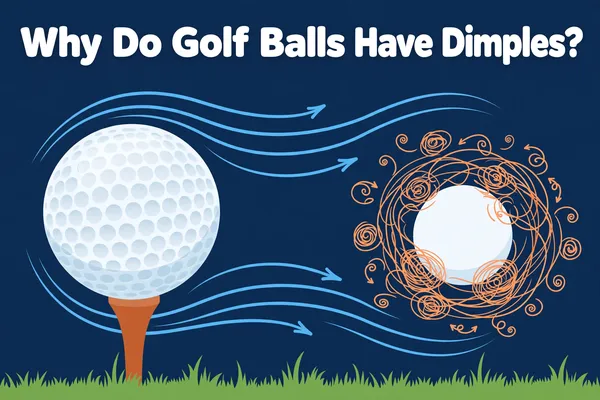
Why Do Golf Balls Have Dimples? The Accident That Doubled the Drive
Why Do Golf Balls Have Dimples? The Accident That Doubled the Drive It looks like a manufacturing defect, and it is the opposite: the hundreds of tiny craters on a golf ball are the reason a drive…